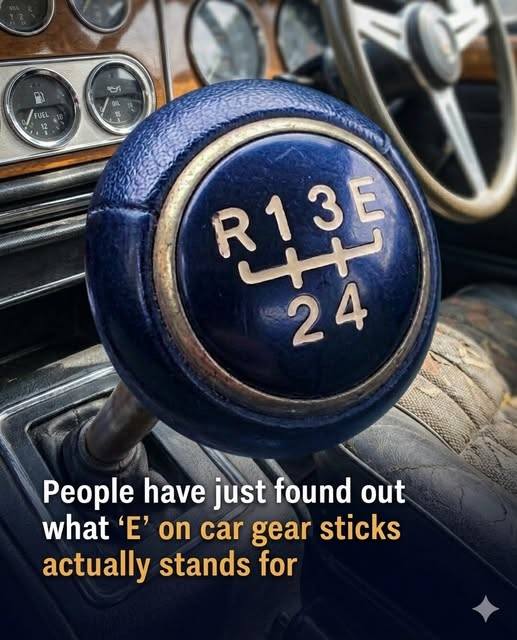
Long before cars became rolling computers filled with sensors, touchscreens, and silent software updates, drivers interacted with machines in a far more physical way. Every sound, every vibration, every shift of the gearbox carried meaning. And hidden among the familiar letters on the gear selector—P, R, N, and D—there was once another symbol that sparked curiosity: a simple, mysterious “E.”
To many drivers, that single letter felt almost futuristic. It promised something irresistible during rising fuel prices and growing concerns about efficiency: the ability to make a car go farther while using less. Yet few truly understood what happened when they moved the selector into that mode. It wasn’t magic, but it changed the entire personality of the vehicle.
The moment “E” was engaged, the car transformed. Gear changes happened sooner and more smoothly, keeping engine revolutions low and controlled. Instead of aggressively chasing speed, the transmission favored calm, measured movement. The engine no longer roared at every press of the accelerator; it relaxed, conserving fuel with every mile. Drivers could feel the difference instantly—not just in the quieter ride, but in the softer throttle response beneath their foot and, eventually, in the relief of fewer stops at the gas station.
More importantly, the “E” mode introduced drivers to a new idea: efficiency as a choice. Until then, performance had often dominated automotive culture. Faster acceleration, louder engines, and higher revs symbolized excitement and freedom. But “E” quietly challenged that mindset. It asked a surprisingly modern question decades before sustainability became a global conversation: Do you want raw power, or do you want to travel smarter?
For many motorists, it was their first direct encounter with fuel-conscious driving. The letter became more than a setting—it became a symbol of changing priorities in the automotive world. Carmakers were beginning to realize that efficiency mattered just as much as horsepower, and drivers were starting to appreciate that smooth, economical driving could have its own kind of satisfaction.
As automotive technology evolved, however, the visible “E” slowly disappeared. Intelligent computers took over the decisions once controlled by drivers. Modern vehicles began optimizing fuel consumption automatically, adjusting transmission behavior and engine performance in ways most people never even noticed. The old gear-selector “E” faded away, replaced by hidden algorithms, adaptive systems, and discreet Eco buttons buried inside digital menus.
But the story didn’t end there.
In a fascinating twist of automotive history, the spirit of that little letter returned in the age of electric vehicles. Today, “E” often represents energy-saving drive modes, regenerative braking systems, and battery-optimization features designed to squeeze every possible mile from a single charge. The technology is dramatically different, yet the philosophy remains exactly the same: maximize efficiency, waste less energy, and go farther.
What once controlled fuel-hungry gasoline engines now shapes the silent behavior of electric motors. Decades may separate those technologies, but they are connected by the same idea carried by one tiny character.
A single letter. Small enough to overlook, yet powerful enough to influence how millions of people drove. From the rumble of classic combustion engines to the near-silent glide of modern EVs, the “E” has endured as a quiet reminder that sometimes the future of driving is not about going faster—but about going farther, smarter, and with less.