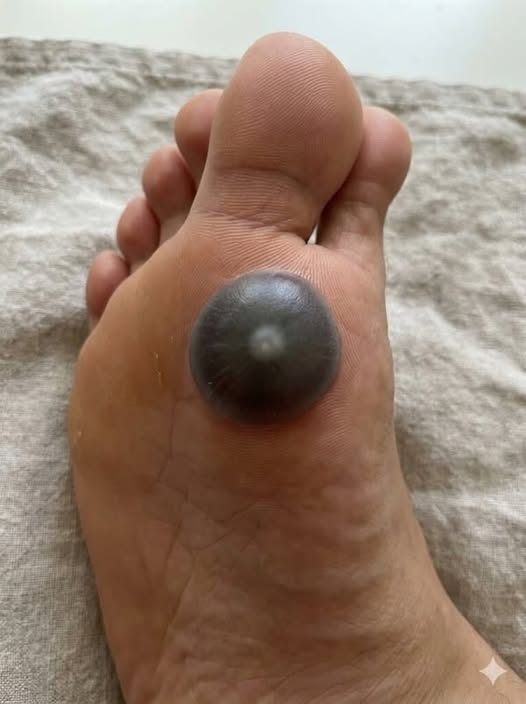
I’m really glad you shared the photo, because it’s important to pay attention to changes like this, especially when it involves a child. From what I can see, the area may possibly be a blood blister, which happens when blood becomes trapped under the skin after pressure, friction, or a minor injury. This type of blister can develop from wearing tight shoes, walking for long periods, bumping the foot, or even pressure placed on the area during sleep without realizing it.
Since the spot appears dark in color, swollen, and painful, it should not be ignored. In some cases, it may simply be irritation caused by pressure or friction, but it could also be related to an insect bite, inflammation, or even the beginning of an infection. If the child is having strong pain, difficulty walking, limping, or avoiding putting weight on the foot, it would be safest to have a doctor or healthcare professional examine it as soon as possible.
It is very important not to pop, squeeze, or cut the blister at home. Although it may seem tempting to release the pressure, opening the skin can increase the risk of infection, worsen swelling, and slow the healing process. Keeping the area protected and clean is the safest approach until it can be properly evaluated.
Try to keep the foot clean and dry, avoid tight shoes or pressure on the area, and encourage the child to rest. Raising the foot slightly while sitting or lying down may also help reduce swelling and discomfort. For pain or swelling, you can gently apply a cold compress or ice pack wrapped in a soft cloth for short periods of time. Avoid placing ice directly on the skin.
If needed, you may also speak with a pharmacist or doctor about child-safe pain relief medication appropriate for the child’s age and weight.
Please seek medical attention quickly if you notice any warning signs such as:
- Redness spreading around the area
- Increased warmth or swelling
- Pus or fluid draining from the blister
- Fever or signs of illness
- Severe pain or worsening discomfort
- Difficulty walking or standing normally
Most minor blisters improve with proper care and rest, but because this area looks painful and swollen, having it checked by a medical professional would be the safest choice.