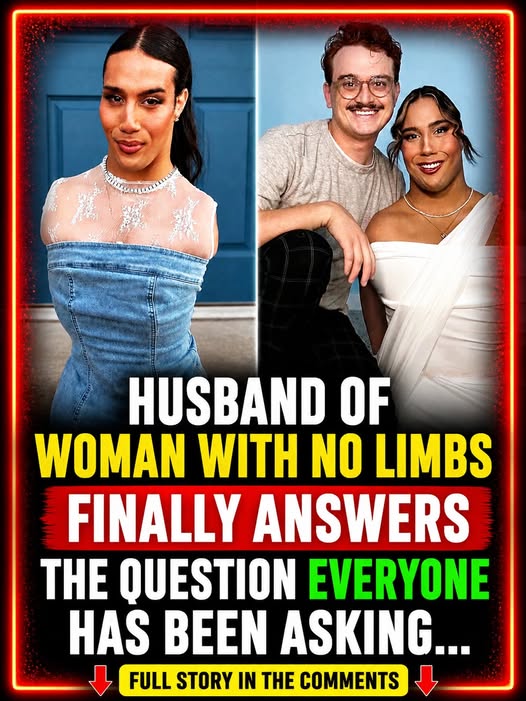
Briel Adams-Wheatley was born into a life most people could never imagine. With a rare and severe congenital condition that left her without limbs, her earliest chapters were defined by medical uncertainty, constant surgeries, and a world that too often looked at her before it listened to her. Doctors called it extraordinary. Strangers called it inspiring or tragic depending on their mood. But none of those labels ever came close to who she actually was.
Because beyond the diagnosis, Briel grew into someone vibrant, expressive, and fiercely creative. She built a presence online that didn’t ask for pity or permission—she simply showed her life as it was. Makeup became her canvas, fashion became her language, and her wheelchair was not a limitation but part of her everyday reality. Millions began to follow her not because of what made her different, but because of how unapologetically alive she was within that difference.
But with visibility came something darker: curiosity that turned invasive, admiration that sometimes slipped into entitlement. The internet, as it often does, fixated on her body, her identity, her relationships—asking questions that were rarely kind and never truly satisfied. And at the center of it all, quietly beside her, was her husband Adam.
Adam didn’t meet a headline. He didn’t meet a story about disability, or transition, or viral fame. He met Briel on Tinder as a person—someone who made him laugh easily, who shared her love for dance, beauty, and self-expression, and who carried a kind of resilience that couldn’t be manufactured. Their connection wasn’t built on explanations or expectations. It was built on ordinary moments that felt anything but ordinary.
At the time, Briel was still navigating her own identity, including the deeply personal process of coming out as transgender. It wasn’t a single moment or announcement—it was a journey, unfolding with vulnerability, uncertainty, and courage. And Adam, instead of trying to define it or rush it, simply stayed present. By the time she told him fully, he already understood something more important than any label: who she was at her core didn’t change what he felt for her.
Still, the outside world wasn’t always so gentle. Followers and strangers alike demanded answers from Adam—questions framed as judgment, disguised as curiosity. They wanted to know how he “handled” her transition, as if love were something to be managed rather than felt.
When he finally spoke openly, his response cut through all the noise with unexpected simplicity. He didn’t talk about confusion or struggle. He talked about her happiness. About the way her confidence grew when she felt seen. About the light in her expression when she was allowed to exist without hesitation or apology.
He admitted there were learning moments—names, pronouns, the private adjustments that come with understanding someone fully as they evolve. But he never framed them as burdens. Instead, he described them as part of loving a real human being who was still becoming more fully herself.
And that, perhaps, was the part the internet never quite knew how to process.
Because what Briel and Adam built together didn’t fit into the boxes people tried to place them in. It wasn’t a story of tragedy, or inspiration, or controversy. It was quieter than that, and stronger because of it—a relationship shaped not by conditions or expectations, but by consistency, patience, and mutual respect.
In a world that constantly demands explanations, they chose understanding. In a space that thrives on judgment, they chose privacy and honesty. And in the middle of all the noise, they built something simple but rare: a love that didn’t need permission to exist.