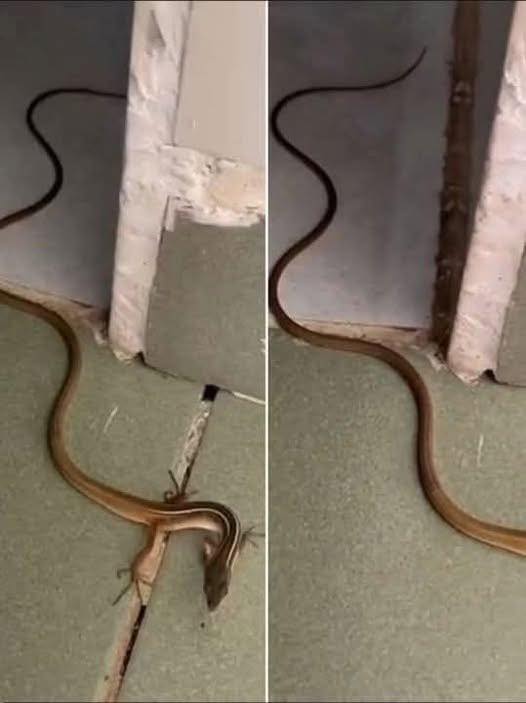
The snake on your floor is not the opening scene of a horror movie—it’s a quiet consequence of nature doing exactly what it’s designed to do. It didn’t arrive out of malice, and it isn’t “invading” in the way fear makes it feel. It is hungry, guided by instinct, and following a trail you may never have noticed: the faint scent of rodents, insects, warmth leaking from your home, or a tiny gap in your defenses that seemed insignificant until now.
It slips in silently through places most people never think to check—cracks in the foundation, unsealed vents, worn door thresholds, gaps under garage doors, or a window left without a proper screen. To the snake, your home is not a target. It is simply shelter, opportunity, and sometimes a shortcut to prey already living too close to you.
And then comes the moment of discovery.
You see it. Your body reacts before your mind catches up. Panic rises instantly. Someone shouts. A child screams. A pet lunges forward, confused and protective. In seconds, a quiet encounter can turn chaotic—not because the snake is chasing danger, but because everything around it suddenly is.
But here is the truth that changes everything: the real risk in that moment is rarely the snake itself—it is the reaction to it.
Most snakes indoors are not aggressive intruders; they are lost visitors following survival instincts. Even so, they deserve caution and respect. A cornered snake, whether venomous or not, will defend itself if it feels trapped. And in the stress of the moment, misidentifying the species or attempting to handle it without experience can quickly turn a manageable situation into a serious one.
This is why the most important response is not bravery—it is control.
Keep distance. Calm the environment. Gently guide children and pets into another room. Close interior doors if possible to limit movement, but do not try to strike, trap, or handle the animal. Give it space. A snake that feels unthreatened is far less likely to behave unpredictably.
Then, step back and let professionals take over. Local animal control, wildlife rescue services, or licensed pest specialists are trained to remove snakes safely and humanely. They understand how to identify species, assess risk, and relocate the animal without harm to you or it.
Once the immediate situation is resolved, the focus shifts from reaction to prevention—and this is where real peace of mind is built.
Seal the small openings that once went unnoticed. Install door sweeps, repair torn screens, and check for cracks in foundations or utility entry points. Reduce clutter in storage areas where rodents can hide. Address food sources that attract insects and mice, because where they go, predators will follow.
It is worth remembering that snakes are not villains in this story. Outdoors, they play a vital ecological role, controlling pests and maintaining balance in the environment. But inside a home, the goal is simple: separation, safety, and prevention.
What begins as a frightening surprise can end as a controlled, one-time event—if handled with calm, distance, and the right help. In the end, it’s not about fear or confrontation. It’s about understanding what the situation truly is, and responding in a way that protects everyone involved.