She glittered beneath lights that never blinked, never softened, never forgave. They bleached the color from her skin and replaced it with something manufactured—something sellable. Cameras loved her with a cold, mechanical devotion; the crowd answered with thunder, with whistles, with standing ovations that echoed louder than any lullaby she had ever known. Behind the applause, men in tailored suits whispered in numbers, margins, and projections, measuring her worth in profits while her childhood slipped silently through a door no one bothered to close.
Backstage, in dressing rooms thick with the scent of powder and quiet desperation, she learned the rituals of survival. Smile on cue. Stand still. Don’t complain. Take what they give you. There were no lessons in selfhood, only in performance. A mother’s ambition hovered like a shadow—sometimes a shield, sometimes a blade—and the studio system pressed in with a cruelty so polished it almost passed for care. Somewhere in between, a child tried to hold onto herself, even as the world insisted on reshaping her.
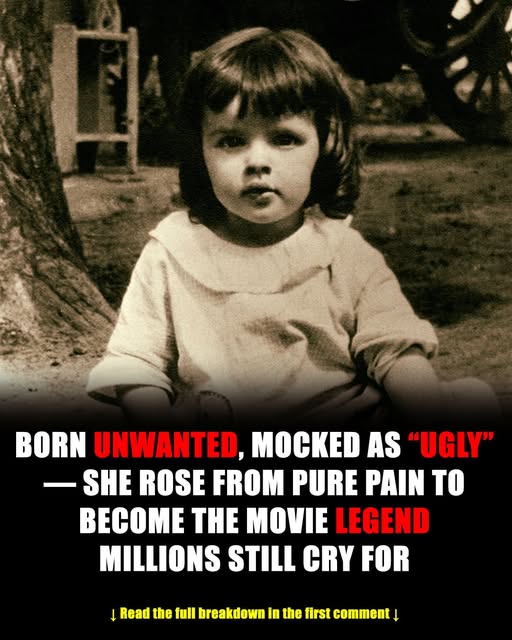
They called her names meant to shrink her: “little hunchback,” “awkward,” “not quite right.” They laughed at her teeth, cinched her body into unforgiving corsets, and dictated what she could eat, how she should look, who she needed to become. Frances Gumm disappeared piece by piece, replaced by the carefully engineered illusion of Judy Garland. The transformation wasn’t magic—it was extraction. Baby fat was stripped away, innocence trimmed down, humanity negotiated in contracts that left no room for exhaustion or refusal.
To keep up, they fed her a rhythm of dependence: pills to wake, pills to sleep, pills to keep the machine running long after the spirit had begun to falter. Fatigue was labeled defiance. Pain was inconvenience. Her mother remained there, always present, yet impossibly distant—caught somewhere between complicity and helplessness. Judy would spend years wondering which truth hurt more: that her mother allowed it, or that she couldn’t stop it.
And yet, when she sang—when she truly sang—something untouched, something fiercely intact, broke through the noise. It wasn’t polished or manufactured. It was longing, raw and undeniable, carrying the weight of everything she was never allowed to say aloud. Audiences didn’t just hear her voice; they felt it, as if she were handing them pieces of herself she had no other place to put.
Her life unfolded in cycles of hope and fracture—marriages that promised refuge, endings that reopened old wounds, attempts to begin again that never quite outran the past. She searched for safety in people, in love, in reinvention, but it always seemed just beyond reach, like a melody she could hear but never fully hold.
Judy Garland’s story is more than tragedy wrapped in glamour. It is a mirror held up to an industry that demands perfection while dismantling the people who create it. It is a reminder that brilliance can survive even in the harshest conditions—but survival is not the same as being saved. And when the world finally stops to mourn its fallen stars, it often does so with the same hands that once pushed them to the edge.