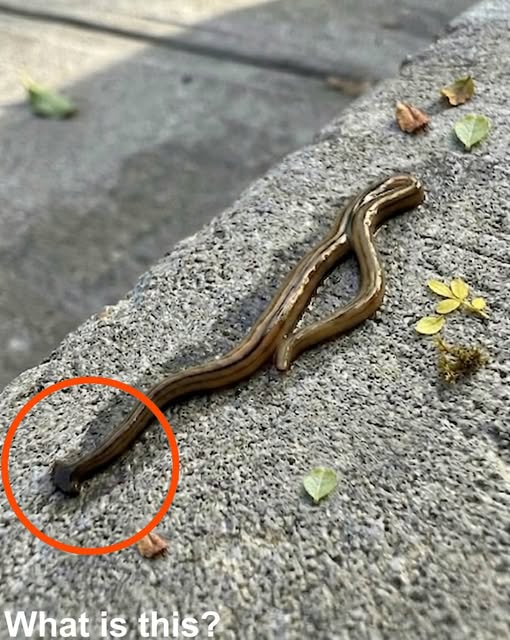
Early that morning, everything felt ordinary. The air was cool, the world still quiet, and I stepped outside expecting nothing more than a peaceful moment to wake myself up. But within seconds, that calm turned into something else entirely.
At first glance, it seemed harmless — just a small, worm-like creature stretched across the ground. I almost ignored it. But then it moved.
Not like any worm I had ever seen.
There was something unsettling in the way it glided — too smooth, almost deliberate, as if every motion was controlled with intention. And then I noticed the head. Flat. Unnaturally shaped. It didn’t belong on something so small. It looked less like a part of an animal and more like a tool… or a weapon.
I stopped cold.
A strange mix of curiosity and unease crept in as I watched it. My mind raced with questions — What is that? Is it dangerous? Should I get closer, or back away? The longer I looked, the more wrong it felt, like I had stumbled onto something I wasn’t meant to notice.
Later, I learned the truth.
This eerie creature is known as a hammerhead worm — a terrestrial flatworm with a distinctive shovel-shaped head and a movement style that feels almost unnatural to watch. And it’s not just an odd-looking organism. It’s a predator.
Hammerhead worms feed on other creatures that live in the soil, especially earthworms — the very organisms that keep soil healthy, fertile, and alive. Realizing that made the encounter even more unsettling. This wasn’t just some strange visitor passing through my yard. It was something that could quietly disrupt the balance of the environment beneath my feet.
Even more concerning, experts warn against handling them with bare hands. These worms can secrete toxins, and cutting them doesn’t necessarily kill them — in some cases, it can make the problem worse. The safest response is to avoid direct contact altogether and follow proper local guidelines if removal is necessary.
What started as a simple step outside turned into an unexpected lesson: not everything in nature announces itself loudly. Sometimes, the most unsettling discoveries are the quiet ones — the ones waiting in plain sight, hidden in the ordinary, until you look just a little closer.