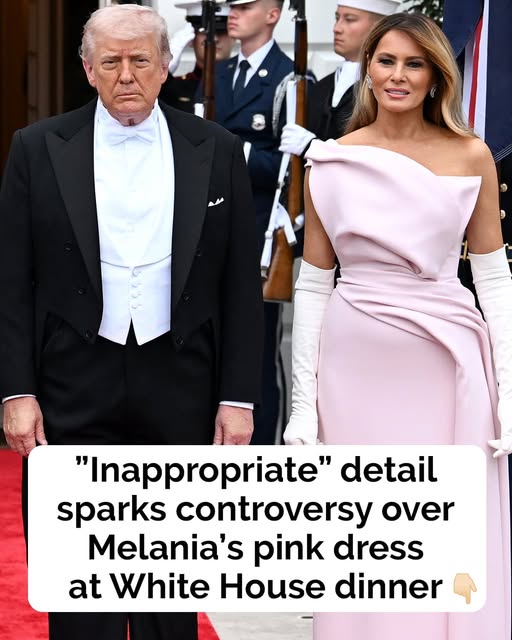
Melania Trump stepped into the White House state dinner like a scene already destined for headlines. In a single, calculated moment, she transformed an evening of diplomacy into a global conversation. One gown. One entrance. And suddenly, the world wasn’t just watching—it was debating. Respect or rebellion? Elegance or audacity? Her $80,000 creation from Dior didn’t just shimmer under the chandeliers; it sparked questions about tradition, power, and the unspoken rules of royalty.
Beneath the glow of crystal lights and the weight of centuries-old protocol, she made a deliberate choice: not to blend in, but to be seen. The sculpted, strapless pink gown clung with precision, its bold silhouette standing in stark contrast to the restrained, often white-toned attire typically favored at such formal gatherings—especially in the presence of figures like King Charles III and Queen Camilla. To some observers, the bare shoulders, dramatic heels, and striking price tag felt almost confrontational, as if challenging the quiet expectations of royal decorum. To others, it was unmistakably intentional—a masterclass in image control from someone who understands that fashion, at this level, is never just fashion.
And then came the aftermath. Screens lit up, timelines flooded, and opinions hardened almost instantly. Social media fractured into distinct camps: critics who saw a breach of etiquette, admirers who praised her confidence, and onlookers captivated by the sheer spectacle of it all. The dinner itself unfolded with flawless precision—speeches delivered, toasts raised, diplomacy intact. Yet long after the final guest departed, it wasn’t policy or politics people remembered. It was the gown.
Because in the end, the moment lingered far beyond the room. It raised a quieter, more enduring question—one that extends beyond a single night or a single dress: in a world so deeply rooted in tradition, is it more provocative to defy expectations… or to disappear quietly within them?