The world is watching a moment that feels less like the end of a conflict—and more like the beginning of something far more uncertain.
From Washington, former President Donald Trump has projected confidence, declaring victory in Iran and suggesting that the core objectives of the campaign have already been achieved. His message is one of finality, of a conflict supposedly brought under control. But behind closed doors, inside the Pentagon, a very different picture appears to be taking shape—one that does not resemble an ending at all.
Military planners are reportedly sketching out contingency operations that go far beyond symbolic pressure. These include limited ground incursions, special forces raids, and targeted coastal missions aimed at strategic infrastructure such as Kharg Island, a critical artery in Iran’s oil export system. While the political narrative speaks of success and resolution, the operational reality being prepared suggests lingering uncertainty, caution, and the possibility that the situation remains dangerously unresolved.
This growing contradiction—between public declarations of victory and private preparation for escalation—has begun to unsettle America’s closest allies.
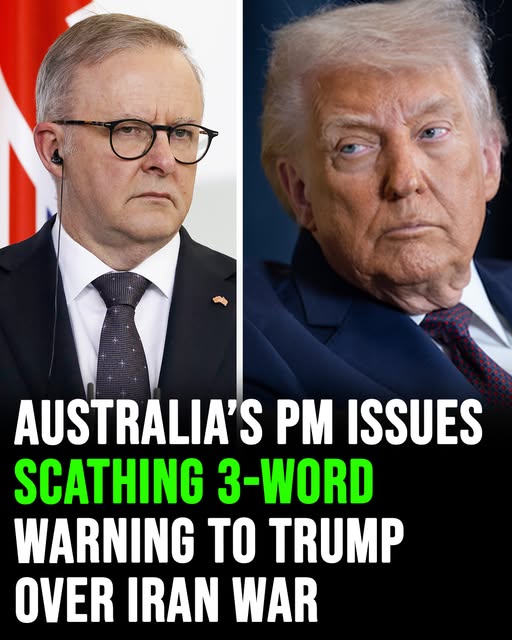
In Canberra, Australian Prime Minister Anthony Albanese broke with diplomatic restraint to openly challenge Washington’s framing of events. While acknowledging that Iran’s nuclear capabilities and regional influence may have been significantly constrained, he questioned the absence of a clearly defined endgame. In his remarks, he warned that without transparency and strategic coherence, the situation risks drifting into deeper instability rather than genuine resolution.
Albanese also drew a sharp distinction between limiting threats and attempting to reshape a nation from the outside. He cautioned that any push toward externally imposed regime change could trigger consequences far beyond what any participant is prepared to control. History, he implied, is filled with examples where military success on paper gave way to prolonged chaos in practice.
At the same time, he did not soften his criticism of Tehran, condemning its harsh repression of women and minority communities. Yet even that condemnation was paired with a broader appeal for restraint and de-escalation, emphasizing that moral clarity alone is not enough to justify strategic ambiguity.
As tensions continue to build between official statements and military planning, one message is becoming increasingly difficult to ignore: what is being called a “victory” may, in fact, be only a pause in a far more complex and unresolved confrontation—one that could still spiral if clarity and control are not urgently restored.