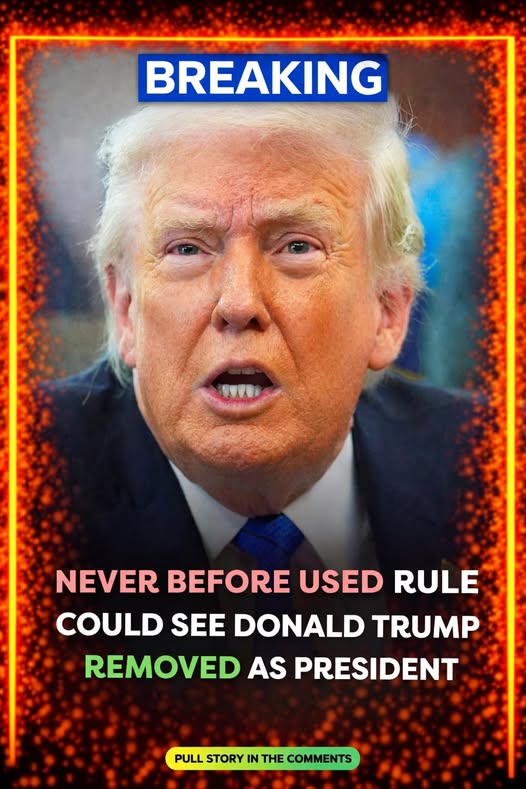
The demand doesn’t arrive quietly—it detonates across the political landscape like a verdict no one expected to hear from within the conservative world itself.
Instead of coming from Trump’s usual critics on the left, the pressure is now emerging from inside right-leaning circles, where one prominent voice is openly urging Vice President JD Vance to take the most extraordinary constitutional step available: invoke the 25th Amendment and effectively strip President Donald Trump of power in the middle of an escalating international crisis.
What makes the call even more explosive is not just the target, but the timing. As tensions surge abroad—missiles in motion, alliances straining, and Iran reportedly signaling a preference to negotiate with Vance rather than the sitting president—the suggestion lands like a political earthquake. It reframes the crisis in Washington as not only a foreign policy emergency, but a test of leadership legitimacy inside the White House itself.
The proposal, associated with commentator Scott McConnell, breaks sharply with the traditional code of loyalty that usually binds a vice president to the president. Instead, it sketches out a scenario that would have been unthinkable just weeks earlier: Vance would declare Trump unable to effectively discharge presidential duties under Section 4 of the 25th Amendment, temporarily assume control of executive authority, and reposition the administration’s direction away from confrontation and toward de-escalation.
In this envisioned plan, the consequences go even further. Vance would not only step in as acting president, but would also step away from any future electoral ambitions, presenting the move as a one-time constitutional intervention rather than a political takeover. Even more controversially, the framework suggests opening the door to a temporary, cross-party governing arrangement—potentially involving anti-war Democratic figures such as Chris Murphy—in an effort to stabilize the situation and prevent a wider regional conflict.
All of this unfolds against the backdrop of Donald Trump’s reported decision to align more directly with Israeli strikes on Iran, a move critics are describing as dangerously escalatory and based on disputed intelligence assessments. Supporters of the proposal argue that such actions risk pulling the United States deeper into a conflict that could rapidly expand beyond control.
Meanwhile, Iran’s reported willingness to engage specifically with Vance rather than Trump has become a symbolic turning point—highlighting a perceived fracture in diplomatic credibility at the highest level of U.S. leadership.
At the center of it all now stands JD Vance himself, caught in an unprecedented political and constitutional dilemma: whether to uphold absolute loyalty to the president who elevated him, or to consider a drastic intervention aimed at preventing what some fear could become a far-reaching international war with consequences well beyond the region.