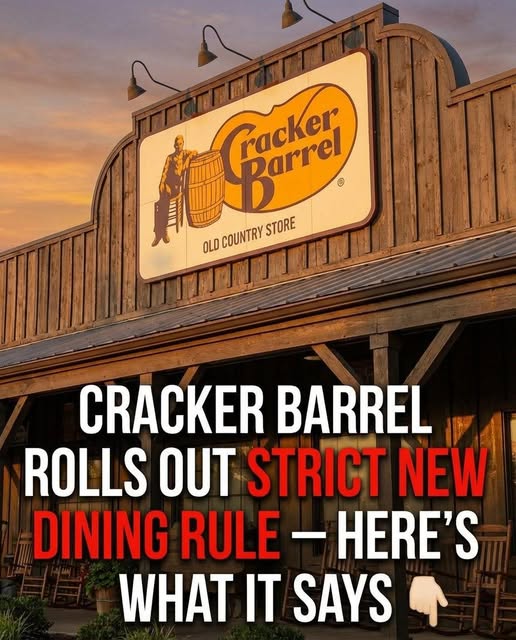
The backlash hit like a slammed door in a quiet hallway. Regular guests, those who had long treated this place as a “home away from home,” found themselves confronted with changes that felt startlingly abrupt. A thinner logo, brighter lights, walls stripped of familiar relics—each small tweak carried a weight far beyond design choices. It was as if the very spirit of the place had been quietly edited, leaving visitors to wonder: if even this sanctuary can change, what else from our own past can simply slip away, unnoticed and unguarded?
For decades, Cracker Barrel wasn’t just a restaurant; it was a time capsule. Guests didn’t come merely for biscuits or gravy—they came for a pause, a promise that somewhere in the world, time could slow just enough for comfort to take hold. The rocking chairs on the front porch weren’t mere furniture. The peg games weren’t trivial amusements. The crowded aisles of the country store, overflowing with trinkets and treasures, were not props—they were proof that memory could live tangibly, and that some spaces refused to move on without you. To change them lightly, without care, was to risk undoing years of trust and affection.
When the redesign first appeared, it landed as a shock. Social media lit up with disbelief and outrage, but beneath the surface of viral reactions was a deeper truth: nostalgia isn’t decoration. It’s not a marketing gimmick. It is a pact with the people who return again and again, a quiet assurance that some things will remain familiar and steadfast, even as the world around them spins faster. Cracker Barrel’s initial misstep was a reminder that the emotional architecture of a place matters just as much as its physical layout.
And so, the company retreated, recalibrated, and reintroduced the familiar touches that had been stripped away. It wasn’t merely bowing to the storm of online opinion; it was acknowledging a profound reality: memory is part of the product. The way we remember shapes the way we experience, and no redesign can succeed if it ignores that bond. Inside the corporate walls, the same lesson played out. Rules meant to streamline costs and efficiency had landed with a cold, impersonal weight, breeding distrust and discontent. Leaders responded not with rigid enforcement, but with context, humility, and a willingness to bend, to meet people where they were.
Cracker Barrel’s journey is now a study in slow, deliberate change. Its future will depend on updates that respect the past, innovations that don’t erase the magic, and policies that serve the heart as well as the ledger. For anyone who has ever walked through its doors, this is a reminder that some places endure because they carry more than a menu—they carry memory, comfort, and the rare, fragile promise that in at least one corner of the world, home still feels like home.