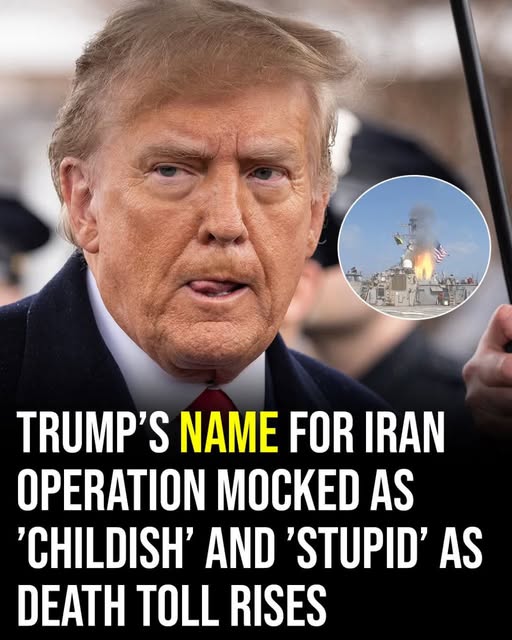
The name struck first, long before the toll of human life could be fully grasped. “Operation Epic Fury” exploded across screens worldwide as fire and smoke curled over the skyline of Tehran, turning the city into a surreal warzone that looked almost staged for a blockbuster trailer. Images of missiles slicing through the sky, command centers reduced to rubble, and the chaos of a city under siege rolled across news feeds as if war itself had been repackaged for prime-time consumption. The branding of the operation became a battlefield in its own right, transforming mass death and devastation into a spectacle, a carefully marketed narrative of precision and inevitability.
What began as a U.S.-Israeli air campaign designed to be swift, decisive, and surgical has now metastasized into something far more volatile—a regional conflagration draped in the language of cinema. Precision strikes, some aimed at Iran’s most guarded military sites and possibly even Ayatollah Khamenei himself, have shattered key command centers. But in doing so, they have also ripped open the fragile seams holding the Iranian political system together. In retaliation, Iran has widened the scope of danger, launching attacks that reach from Gulf bases to a British airfield in Cyprus, signaling that it is prepared to bleed the West wherever it can. Behind every carefully crafted press briefing about “surgical strikes” and “limited objectives,” the reality is far grimmer: hospitals are overwhelmed, families sift through rubble for the bodies of loved ones, and casualty lists stretch across Iran, Israel, the United States, and multiple Arab nations caught in the crossfire.
Yet it is the dissonance—the gap between rhetoric and reality—that may leave the deepest mark. A campaign sold like a summer blockbuster is unfolding as a slow-motion humanitarian catastrophe, with no defined “day after” and no plan for the power vacuum in Tehran. Proponents insist that overwhelming force is the only way to halt Iran’s nuclear ambitions and curb its regional proxies. Critics counter that removing leadership without a clear transition strategy risks something far worse: civil war in a nation of 90 million people, at the heart of global energy routes. Between these extremes stand the ordinary actors—the soldiers, the medics, the civilians—who bear the immediate consequences. They understand, in ways that headlines cannot capture, that whatever future historians write, this war will not be “epic.” It will be scarring, brutal, and unrelenting, and the flashy title bestowed in Washington will fade far faster than the anger, loss, and hatred it has set in motion.