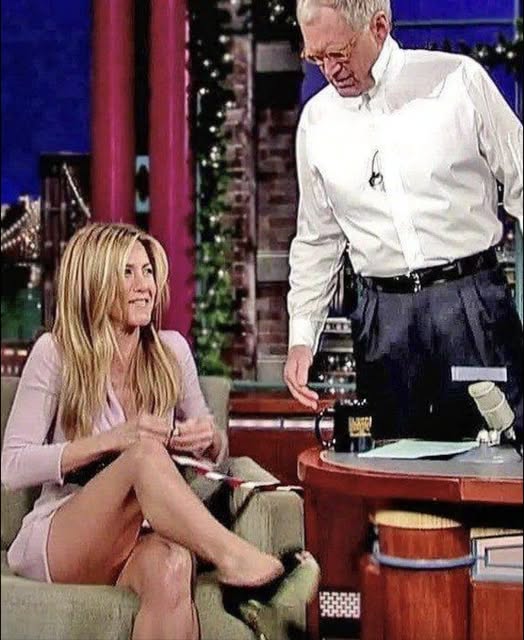
The crowd erupted on cue—applause crashing like a wave against the stage. But she didn’t move with it. Didn’t rise to meet it. Under the hot, unforgiving glare of studio lights, something quieter flickered—something the audience, at the time, didn’t have the language to name. What millions once devoured as effortless late-night entertainment now plays back with a different weight, a different tension. The laughter feels louder than it should. The pauses feel longer. And the moments we once brushed off now sit heavy, like a warning we collectively chose not to hear.
His hands lingered a second too long. His jokes landed just close enough to the edge to blur the line between playful and invasive. The camera, complicit in its own way, refused to look away—hovering, framing, turning discomfort into spectacle. Back then, it was packaged as charm. As chemistry. As that elusive spark audiences are trained to celebrate. But watching it now, stripped of nostalgia, it feels less like comedy and more like control—subtle, smiling, and deeply normalized.
What once passed as harmless banter between a beloved host and Jennifer Aniston now unfolds like a slow-motion unraveling. Every exchanged glance, every carefully measured response, carries a new kind of gravity. Her composure—once praised as effortless cool—reveals itself as something far more deliberate. Not ease, but endurance. Not spontaneity, but strategy. It reads like armor, built piece by piece in real time, worn gracefully enough that most people never noticed it was there.
And that’s the unsettling truth these resurfaced clips force us to confront. They don’t just point fingers at a single man or a single moment. They expose something wider, more insidious—a culture that taught women to absorb discomfort with a smile, to deflect tension with humor, to remain agreeable no matter the cost. A culture that trained audiences, too, to laugh on cue, to interpret unease as entertainment, to reward compliance with applause.
Rewatching now, the illusion cracks. “Chemistry” starts to look like pressure dressed in better lighting. Charm edges into entitlement. And the laughter—our laughter—echoes differently, no longer harmless, but part of the mechanism that allowed those moments to pass without question. That knot in the stomach we feel today isn’t just hindsight. It’s recognition. It’s the slow, uncomfortable realization that what we once accepted so easily deserved a second look.
We can’t rewrite those moments. We can’t step back into that studio and shift the angle, soften the joke, or silence the crowd. But we can change what we choose to see now—and what we choose to ignore next time. Because maybe the most important sound in that room was never the roar of the audience.
Maybe it was the silence of the one person who didn’t laugh—and the truth we’re only just beginning to hear.