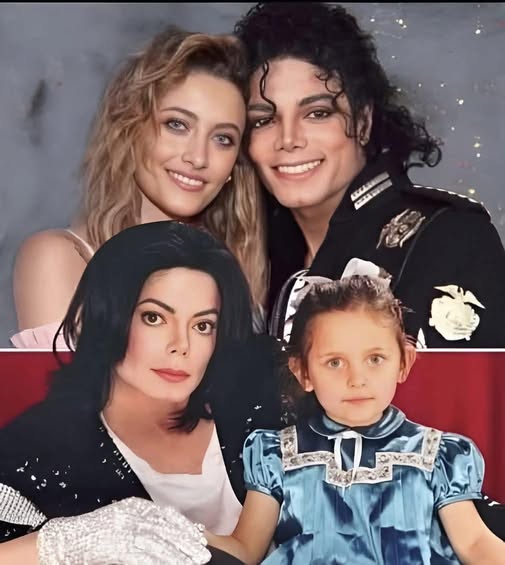
The world thought it knew Michael Jackson. The headlines, the rumors, the documentaries—they all claimed to tell his story. But the world never knew the father who stood at the stove on quiet Sunday mornings, flipping pancakes for his children, listening to their laughter, and offering love in ways that never made the tabloids. For years, Paris Jackson carried her memories in silence, watching as strangers tore apart the man who had raised her, loved her, and then, heartbreakingly, left her too soon. Now, she is stepping forward—not with the force of anger, but with something subtler, more disarming, and infinitely more powerful: a reckoning born of grief, memory, and truth.
She writes not as the daughter of a global icon defending a brand, but as a child reaching through the noise, attempting to reclaim fragments of her father from a world eager to judge. Her words acknowledge the fractures that define his legacy—the allegations, the documentaries, the endless debates that ignite whenever his name is mentioned. Yet she does not demand that anyone take sides. Instead, she asks for something far more radical: the courage to hold contradictions, to see a man who could be both deeply flawed and fiercely loving, both celebrated and painfully lonely.
What lingers in her writing, more than any anecdote or revelation, is a refusal to let anyone else define either her or her father. She has carried the masks, the gates, the public scrutiny, and the unbearable weight of a legendary name into every corner of her art and activism. She transforms inherited pain into empathy, inherited fame into a platform for honesty. In choosing compassion over combat, she offers the world a different kind of legacy—one that is not tidy, not perfectly packaged for headlines, but profoundly human.
In the end, Michael Jackson is not a verdict for Paris. He is a memory, complex and vivid, woven through moments of joy and sorrow, laughter and loss. A memory she refuses to surrender to gossip or speculation, to a world that wanted to define him without knowing him. And in holding onto that memory, she teaches something rare and essential: that love, grief, and remembrance are more enduring than fame, more enduring than judgment, and far more powerful than the narratives that try to contain them.