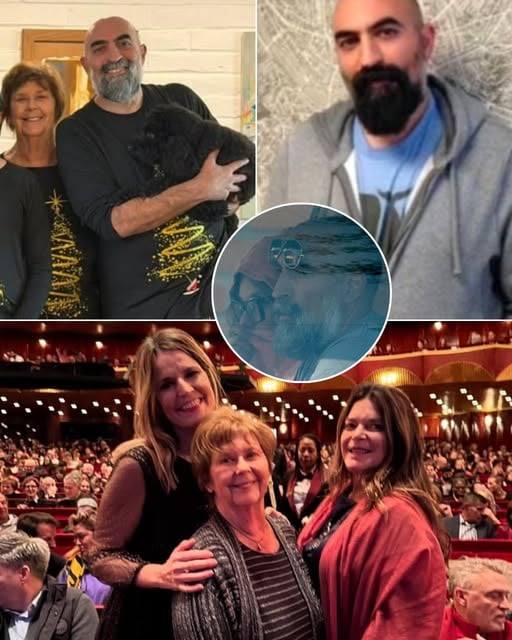
Savannah Guthrie’s voice finally cracked—but not under the bright lights of live television, and not behind the practiced calm of a news desk. It broke in a quiet, deeply personal video, recorded without makeup, without notes, without a safety net. Sitting close beside her brother and sister, Savannah appeared not as a celebrated anchor, but as a frightened daughter pleading for one thing only: proof that their 84-year-old mother, Nancy, is still alive.
The footage revealed a version of Savannah the public rarely sees. Gone was the polished composure viewers have come to expect. In its place was raw vulnerability. Shoulder-to-shoulder with her siblings, Annie and Cameron, Savannah struggled through long pauses, her words weighed down by exhaustion and dread. Each silence seemed to say what her voice could barely hold—that fear had settled in, heavy and unrelenting.
Rather than anger or accusation, Savannah chose restraint. Addressing whoever might be holding her mother, she spoke with deliberate calm, resisting blame in favor of humanity. Her request was not confrontational, but quietly urgent: communicate. Let there be proof of life. She offered conversation instead of condemnation, understanding that any path—no matter how fragile—was worth taking if it meant her mother might survive.
The family acknowledged the existence of an unverified ransom note, careful not to confirm or deny its legitimacy. Instead, they spoke to the possibility that someone, somewhere, was listening. Their message cut through the uncertainty with heartbreaking simplicity: please, show us that our mother is alive.
Then, the tone shifted. Savannah turned away from the unseen captor and spoke directly to Nancy, as if love itself could bridge the distance. Her voice softened as she called her mother “God’s precious daughter,” a phrase filled with faith, reverence, and aching hope. She promised that the family would not stop—not searching, not praying, not believing.
Every hour, Savannah vowed, brought renewed effort. Every moment was filled with prayer and determination. Silence, she said firmly, was not an option. Not while there was still a chance. Not while hope, however fragile, still breathed.
Annie followed, her voice barely above a whisper, offering a simple but devastating plea: “Mama, we miss you.” Cameron added a few quiet words of his own, reflecting the toll of four agonizing days without answers and the growing fear for their mother’s fragile health.
The video ended as it began—without resolution, without certainty. There was no closure, only love spoken into the void. A family suspended in fear and faith, clinging to the belief that somewhere, somehow, Nancy might hear them—and that their words, carried by hope, might still find their way home.