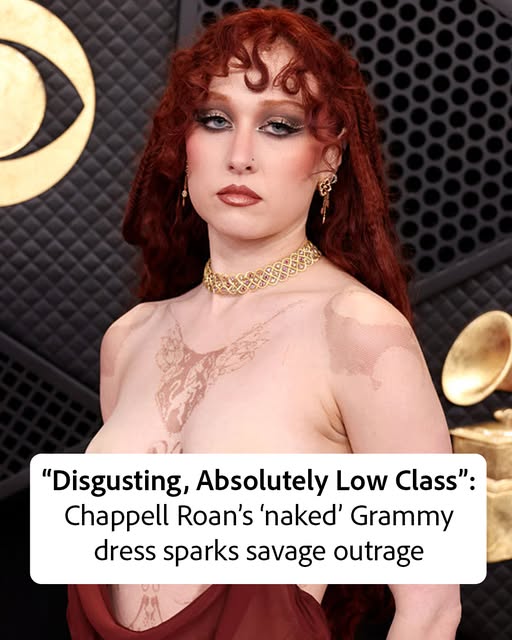
The cameras caught her first. Then the internet detonated.
At the 2026 Grammy Awards, as flashbulbs ricocheted across the red carpet and social feeds refreshed by the second, Best New Artist winner Chappell Roan became impossible to ignore. She arrived draped in a sheer, maroon Mugler gown punctuated by a sculptural chest ring—an arresting silhouette that instantly split the audience into furious, immovable camps. To some, it was high art. To others, it was provocation bordering on desperation. Within minutes, the discourse had swallowed the night.
Inside the ceremony, artists used the Grammys’ global stage to condemn Trump-era immigration policies, delivering impassioned speeches about borders, belonging, and power. Outside, however, a different kind of politics was unfolding—one written directly onto a woman’s body. Roan’s look, a deliberate homage to Manfred Thierry Mugler’s 1998 archive, transformed archival fashion into a modern cultural flashpoint. What was meant as reverence for a legendary designer became, instead, a referendum on taste, morality, and attention in the age of viral outrage.
Critics were quick to dismiss the gown as evidence that red carpet fashion has collapsed into little more than shock for shock’s sake. Commentators hurled familiar accusations: immodest, thirsty, trying too hard to be remembered. But fans saw something else entirely—a fearless act of self-authorship. To them, Roan wasn’t chasing attention; she was wielding it, using theatrical self-expression and queer-coded camp to challenge who is allowed to be visible, bold, and unapologetic on one of pop culture’s biggest stages.
The backlash revealed more about the audience than the artist. Arguments over “decency” and “respectability” clashed head-on with defenses of bodily autonomy, performance art, and the long tradition of using fashion as spectacle and rebellion. And through it all, Roan remained silent. She didn’t clap back. She didn’t explain. She didn’t apologize.
She didn’t need to.
Her nominations, her win, and her rapidly expanding influence spoke for her. Whether the Mugler gown is remembered as vulgar excess or visionary homage, one truth is unavoidable: it worked. In a night overflowing with speeches, statements, and soundbites, it was Chappell Roan’s quiet defiance—wrapped in sheer fabric and archival intent—that echoed the loudest.