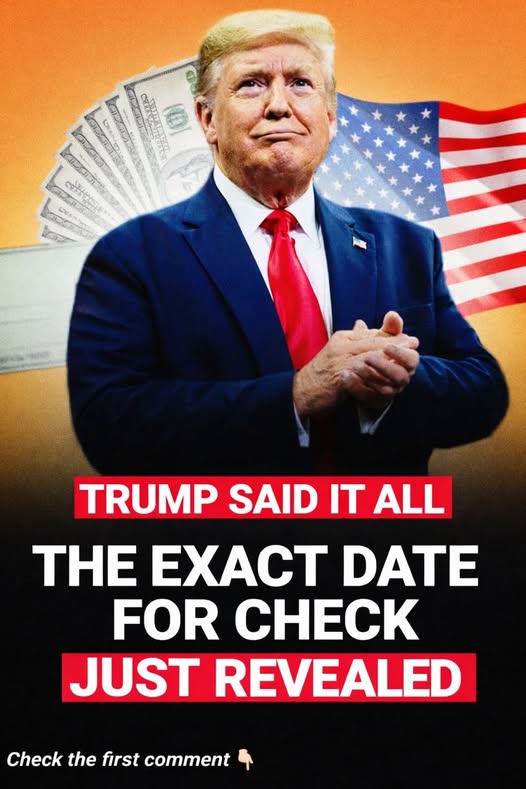
Donald Trump’s $2,000 Christmas promise hit the nation like a lightning strike—bright, dazzling, and impossible to ignore. It cut through the noise of campaign speeches and policy papers with the seductive simplicity of a miracle: cash, straight to Americans, before the holidays. A gift not from Santa, but from tariffs.
For millions struggling to stretch shrinking paychecks, it sounded almost divine. Two thousand dollars — enough to keep the lights on, fill a fridge, pay down a balance, or stack a few presents under the tree. Within hours, social media erupted with cheers, disbelief, and questions. Trump’s words carried the kind of emotional voltage that turns politics into hope.
But beneath the applause lies a brutal, unanswered question: Can it actually happen?
There’s no law authorizing such payments. No congressional approval. No mechanism ready to send checks. No timeline. Not even a confirmed source of funds beyond a vague promise that “tariffs will pay for it.” And tariffs, economists warn, are an unpredictable engine — they rise and fall with global trade winds and often send the bill right back to American consumers through higher prices at the checkout line.
Yet the brilliance of Trump’s announcement lies in its emotional precision. It translated something abstract — trade policy, international markets, economic theory — into something tangible, personal, and painfully relatable: $2,000 on a kitchen table. It took a complex global argument and turned it into a family story, told in overdue bills and grocery receipts.
For families who feel invisible in economic reports, that image alone was enough. They could picture the relief — the sudden weight lifted from their shoulders, the sense of breathing room during a season that has felt increasingly impossible to afford. Hope, however fragile, was back on the menu.
Still, the gap between promise and reality remains vast. Delivering such payments would require the coordination of multiple federal agencies, new legislation, and a legally sound revenue stream — a bureaucratic mountain that takes months, not weeks, to climb. Even if tariffs brought in billions, their volatility and long-term economic side effects make them a shaky foundation for a permanent “dividend.”
For now, the $2,000 Christmas pledge stands not as policy but as a powerful symbol — a story Americans want to believe. It captures the hunger for immediate relief in a time when wages lag, costs rise, and political promises rarely translate into personal change.
Whether it becomes a historic act of generosity or fades as another campaign flashpoint will depend not on economics alone, but on belief — the enduring hope that someone, somewhere in power, still remembers what it feels like to need help before Christmas morning.