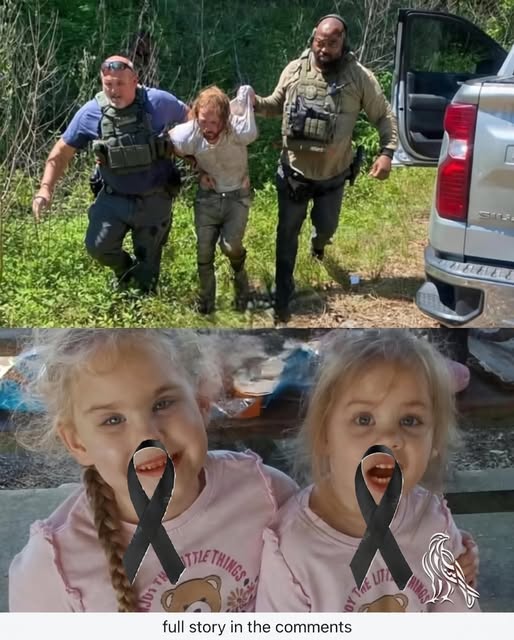
Some stories do not stop us because they are loud or sensational. They stop us because they feel painfully close to ordinary life. They force us to confront a truth most people try not to think about too often: how quickly a normal day can fracture into something unimaginable. One moment, life moves in familiar rhythms — children playing, neighbors passing by, routines unfolding without a second thought. Then suddenly, in the span of only a few terrifying moments, everything changes, and an entire community is left staring at how fragile safety truly is.
What shook people most about this story was not only the danger itself, but the horrifying speed with which tragedy almost unfolded. In the middle of what should have been an uneventful day, observant neighbors noticed smoke and sensed that something was deeply wrong. There was no certainty yet, no full understanding of what waited behind the door, only instinct and urgency. But instead of hesitating, instead of assuming someone else would respond, they moved toward the danger. They called for help. They acted decisively. And because of those few courageous seconds, two little girls were brought to safety before the situation could become irreversible.
That reality is difficult to forget. A single delay, a moment of doubt, a choice to look away — any of those could have changed the ending forever. What might have become a devastating loss instead became a powerful reminder of how much human lives can depend on ordinary people choosing courage over fear. Sometimes history is not altered by grand heroes or dramatic rescues seen from afar. Sometimes it changes because neighbors decide that another person’s safety matters enough to risk stepping closer to the smoke instead of retreating from it.
That is the part of this story worth holding onto most carefully. In a world where people often accuse society of becoming cold, distracted, or emotionally disconnected, these neighbors demonstrated the exact opposite. They paid attention. They trusted their instincts when something felt wrong. They refused to remain passive witnesses. And because they acted with urgency and compassion, two innocent children were spared from harm, while an entire community was left with gratitude instead of unbearable grief.
Yet beneath the relief sits another emotion that is harder to speak about honestly — sorrow. Because stories like this rarely begin in a single moment. Human collapse is almost never instantaneous. When a parent reaches a breaking point severe enough to place children in danger, it is often the final chapter of a much longer and quieter unraveling. Behind closed doors, beneath routines and forced smiles, struggles can deepen unnoticed for weeks, months, or even years. Emotional exhaustion, untreated mental-health crises, overwhelming stress, isolation, fear, financial pressure, trauma — these burdens often grow silently until the weight becomes too heavy for one person to carry alone.
Authorities and crisis responders in situations like these frequently point toward serious emotional distress or mental-health emergencies as contributing factors. Child-protection teams and crisis counselors are often brought in not only to investigate what happened, but to stabilize what remains afterward. None of this removes accountability. Children must always come first. Safety must always be protected. But acknowledging the human suffering beneath a crisis does not excuse harm — it simply recognizes that tragedies are often born from pain long before they become visible to the public.
This is where the conversation becomes uncomfortable, but deeply necessary. Compassion is not the same thing as minimizing danger. Compassion does not ask us to pretend frightening actions are harmless. Instead, true compassion demands honesty from all sides. It demands protecting vulnerable children while also refusing to reduce human suffering into a headline built only on outrage. Because if communities only react after catastrophe appears, then they miss the deeper lesson entirely.
The harder questions remain waiting underneath stories like this. How many warning signs are overlooked before someone emotionally collapses? How many people spend years carrying silent despair while everyone around them assumes they are “holding it together”? How many parents are functioning on exhaustion so severe that they are only one untreated crisis away from disaster? And how often does shame prevent struggling people from admitting they are no longer okay?
The most powerful part of this story is not only the rescue itself. It is what the rescue revealed about what communities are supposed to be. Human beings were never meant to live beside one another as strangers who only notice each other once tragedy arrives. Communities are meant to recognize suffering before it becomes dangerous. They are meant to notice when someone’s exhaustion has become something darker. They are meant to ask difficult questions, to check in repeatedly, to create spaces where vulnerability is met with support instead of judgment.
Real prevention rarely looks dramatic. Most of the time, it looks painfully ordinary. It looks like a phone call made at the right moment. A neighbor knocking on a door. A friend asking twice instead of once, “Are you really okay?” It looks like families speaking openly about emotional burnout, depression, fear, anxiety, and mental exhaustion before silence transforms suffering into isolation. It looks like communities building enough trust that asking for help no longer feels humiliating or weak.
What happened here left people deeply shaken, even with the children now safe. Fear like that does not disappear overnight. Parents hold their own children tighter afterward. Neighbors replay the images repeatedly in their minds, wondering how close everything came to ending differently. Relief and heartbreak often arrive together in moments like this. Relief that lives were spared. Heartbreak that the crisis existed at all. Heartbreak that pain had grown severe enough for such danger to become possible.
And perhaps there is a deeper spiritual truth hidden inside stories like these: people do not always break loudly. Sometimes the deepest suffering hides itself behind routine smiles, quiet pride, or exhausted silence. Some people continue functioning outwardly while inwardly collapsing piece by piece. That is why attentiveness matters so profoundly. Paying attention is an act of mercy. Listening carefully is mercy. Reaching out before someone asks is mercy. Refusing to mock, dismiss, or ignore visible signs of emotional unraveling may be the very thing that prevents private suffering from becoming public tragedy.
Ultimately, the weight of this story reaches far beyond one neighborhood or one frightening afternoon. It stands as both a warning against indifference and a testimony to the extraordinary power of ordinary courage. Two little girls are alive and safe today because people chose not to look away. They chose action over apathy. They chose humanity over hesitation. And that matters more than words can fully express.
But perhaps the most important question this story leaves behind is not whether we would be brave enough to act during a visible emergency. The deeper question is whether we are compassionate enough to notice suffering before the emergency ever begins.