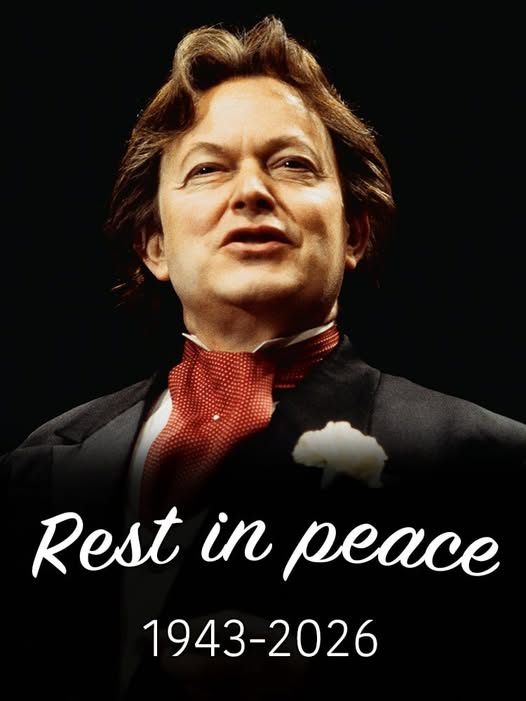
Hollywood is in mourning. Across stages, film sets, and fan conventions around the world, disbelief hangs heavy in the air. Fans are heartbroken. Fellow actors are struggling to find the words. And the quiet, scholarly boy from Cambridge who once stood inside the shadow of the Death Star has taken his final bow.
As tributes flood social media and memories pour in from grieving colleagues, the magnitude of this loss is becoming impossible to ignore. This was never simply the passing of another actor from the Star Wars universe. The world has lost a performer of astonishing depth — a man who moved effortlessly between blockbuster mythology and the sacred intimacy of live theatre, leaving an indelible mark on both.
To millions of moviegoers, Michael Pennington will forever be remembered as Moff Jerjerrod, the conflicted Imperial officer charged with overseeing the construction of the second Death Star in Return of the Jedi. In a galaxy filled with villains, warriors, and legends, Pennington brought something unusual to the role: humanity. Beneath the crisp uniform and stern commands was a flicker of uncertainty, a subtle tension that made the character unforgettable. With only a handful of scenes, he managed to create a figure fans discussed for decades — proof that true actors do not need endless screen time to leave a lasting impression.
But beyond the stars, beyond the lightsabers and cinematic spectacle, existed the world where Michael Pennington’s artistry truly flourished. On stage, he was magnetic. To theatre audiences and critics alike, he was regarded as one of the most intelligent and emotionally precise Shakespearean actors of his generation. He possessed a rare ability to make centuries-old dialogue feel immediate and painfully human, transforming classic texts into living, breathing emotion. When Pennington performed Shakespeare, audiences did not feel they were watching history — they felt they were witnessing confession, heartbreak, ambition, and vulnerability unfold in real time.
In 1986, Pennington co-founded the English Shakespeare Company, dedicating himself to making classical theatre accessible, urgent, and alive for modern audiences. It was not merely a career move; it was a mission. He believed Shakespeare belonged to everyone, not just elite theatre circles, and he spent decades proving that timeless stories could still shake audiences to their core. Through bold productions, fearless performances, and uncompromising dedication to the craft, he helped revive a passion for classical drama in an entirely new generation.
His collaborations with legendary performers such as Judi Dench and Michael Williams further cemented his reputation as an actor’s actor — respected not only for his talent, but for his discipline, generosity, and intellect. Whether portraying Hamlet’s tortured introspection, delivering powerful appearances in films like The Iron Lady, or lending his voice to the haunting sci-fi world of Raised by Wolves, Pennington approached every role with the same unwavering commitment to truth and artistry.
Friends and colleagues often described him as thoughtful, humble, and intensely curious — a man far more interested in the work itself than fame or celebrity. In an industry increasingly obsessed with spectacle, Michael Pennington remained devoted to substance. He carried entire worlds on his shoulders without ever demanding attention for himself.
Now, as the curtain falls and audiences reflect on a career spanning decades, the tributes arriving from every corner of the entertainment world feel less like ordinary condolences and more like collective gratitude. Gratitude for the performances that moved people. Gratitude for the stories he helped preserve. Gratitude for an artist who gave everything he had to his craft until the very end.
Michael Pennington was not simply part of cinematic history. He was part of cultural history — a rare bridge between blockbuster fantasy and the timeless power of live performance. And while the galaxy he once helped build may live forever on screen, the loss of the man behind it leaves a silence that will be felt for years to come.