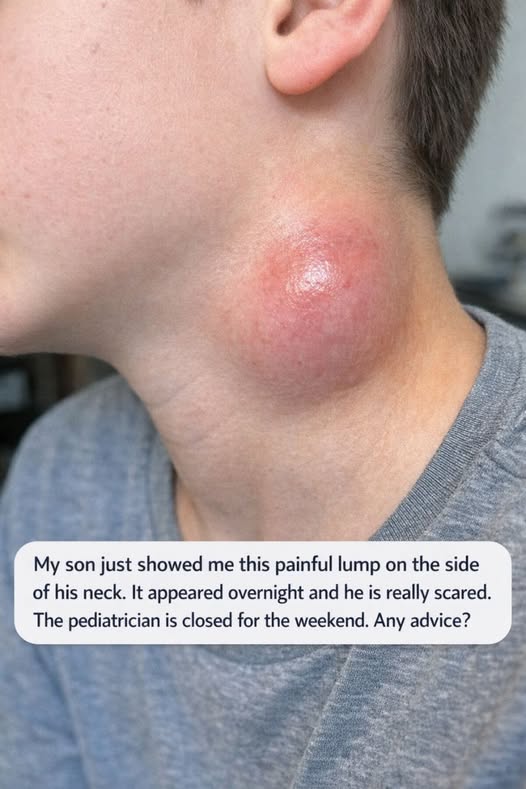
The lump wasn’t there yesterday.
One day your child’s neck is completely normal, and the next you notice it—an unexpected swelling that seems to appear out of nowhere. It feels sudden, alarming, and impossible to ignore. Your mind starts racing: How long has it been there? Why now? Is it something simple… or something serious? And the hardest part is that the pediatrician’s office is closed, leaving you stuck in uncertainty while your child looks at you for reassurance.
Your child can feel your worry, even when you try to hide it. They might be scared, confused, or constantly touching the area. And you’re trying to stay calm while quietly running through every possible scenario in your head.
In most cases, a sudden neck lump in children is not dangerous. The most common cause is actually the body doing exactly what it’s supposed to do—reacting to a routine infection. Swollen lymph nodes can appear quickly when the immune system is fighting off something as simple as a cold, sore throat, or mild virus. They often feel like small, movable “peas” under the skin and may be slightly tender, but otherwise harmless.
A helpful first step is to pause and gently assess. Stay calm, sit with your child, and offer reassurance. You can softly explain that the body has “little defense nodes” that sometimes get bigger when they are working hard to protect them. Carefully feel the lump without pressing too firmly, and compare both sides of the neck. If it is small, soft, somewhat movable, mildly sensitive, and your child otherwise seems well—eating, breathing comfortably, playing normally—this often allows safe observation at home while you arrange a routine pediatric visit.
However, there are moments when waiting is not the right choice.
Certain signs should never be ignored: difficulty breathing or swallowing, drooling, a rapidly growing lump, severe or worsening pain, a very high fever, or a hard, fixed mass that does not move under the skin. These symptoms require immediate medical attention and an emergency visit without delay.
While you are monitoring, comfort matters. Warm compresses can help ease tenderness, encouraging fluids supports recovery, and rest gives the body a chance to heal. If your child is uncomfortable, age- and weight-appropriate pain relief may help—always following proper dosing guidance. Avoid squeezing, pressing, or trying home “fixes” on the lump, as this can cause irritation and is not helpful for diagnosis.
And most importantly, remember this: uncertainty is exactly when it’s appropriate to ask for help. Whether it’s a nurse hotline, telehealth service, urgent care clinic, or emergency room when needed, reaching out is not overreacting—it’s responsible care.
You are not expected to diagnose this alone. You are expected to notice, respond, and protect your child. And you are already doing that.