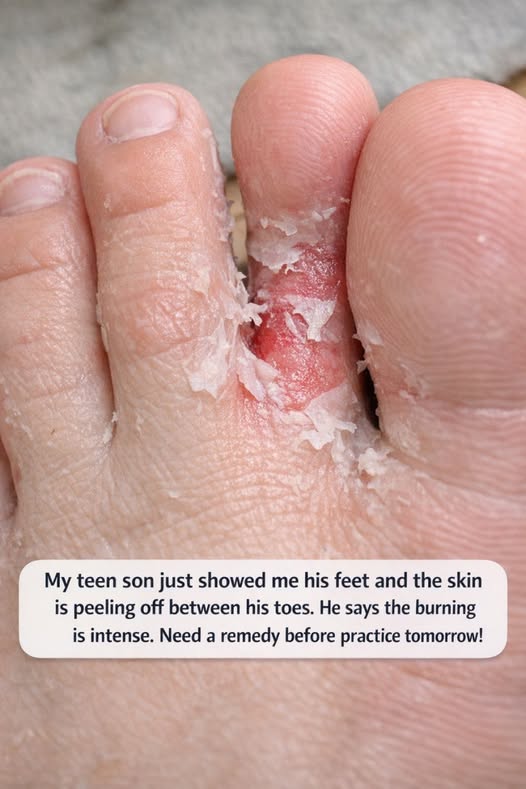
That raw, peeling skin between his toes is far more than a minor irritation or something to simply ignore. It’s a visible signal from the body that the environment inside his shoes has become unbalanced—warm, damp, and trapped for too long. In that hidden space, moisture and friction quietly create the perfect conditions for trouble to grow.
In many cases, this is athlete’s foot, a persistent fungal infection that thrives in exactly those conditions: sweaty socks, tight footwear, long hours of practice, and little time for the skin to properly breathe and recover. What starts as mild peeling or itching can gradually escalate. The skin may begin to crack, sting, or burn with every step. If neglected, it can even open the door to secondary bacterial infections, turning a small discomfort into something that can genuinely interfere with training, performance, and daily movement far longer than expected.
But the important truth is this: acting early can completely change the course of it.
A simple, careful routine tonight can already start to reverse the damage. Cool, clean water can soothe irritation and wash away buildup. Gentle cleansing followed by thorough, patient drying—especially between the toes—removes the moisture that allows the problem to persist. With consistency, even these small steps bring noticeable relief.
From there, antifungal creams or sprays can directly target the infection, helping the skin heal from the inside out. Fresh, moisture-wicking socks and well-ventilated shoes reduce the chance of recurrence, allowing the feet to stay dry and comfortable throughout the day. These are not complicated changes, but they make a powerful difference when applied consistently.
By tomorrow’s practice, the goal isn’t just comfort—it’s confidence. The ability to move, run, and train without distraction, irritation, or self-consciousness.
Just as meaningful as the physical care is the emotional reassurance that follows. A calm, honest conversation reminding him that this is extremely common, fully treatable, and nothing to feel embarrassed about can make a lasting impact. It shifts the experience from something hidden and stressful into something understood and manageable.
And in the long run, that understanding becomes its own form of protection—helping him take better care of himself, respond early next time, and move forward without fear or shame, long after this small flare-up is gone.