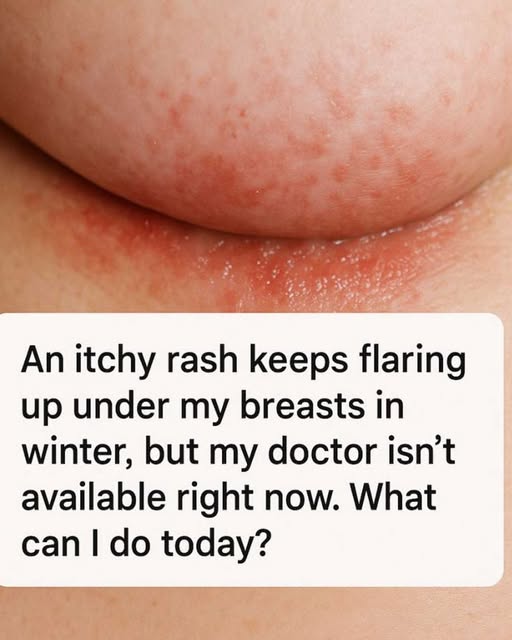
As the cold weather settles in and layers of clothing become part of everyday life, an uncomfortable and often distressing problem can quietly begin to surface beneath the breasts. At first, it may feel like nothing more than a mild irritation — a faint redness, a slight warmth, or an occasional itch that seems easy to ignore. But over time, that subtle discomfort can evolve into something far more persistent and hard to dismiss.
You might notice a burning sensation that appears out of nowhere and lingers far longer than it should. The skin under the breast can start to feel raw, tender, and unusually sensitive — even the light touch of fabric or a properly fitted bra may begin to sting. Despite careful washing, switching to looser clothing, or trying to keep the area dry, the irritation can continue to return. And with each passing day, it may seem to spread a little further, becoming redder, angrier, and more difficult to soothe.
Naturally, this leads to concern. Is it just winter dryness and friction? A reaction to fabric or detergent? Or something that requires more attention than home remedies can provide? That uncertainty can be just as uncomfortable as the physical symptoms themselves, especially when nothing you try seems to bring lasting relief.
In many cases, this condition is linked to intertrigo — an inflammatory skin issue that develops in warm, moist areas where skin rubs against skin. Under the breasts, this environment is especially vulnerable. Cold weather often makes it worse in a less obvious way: heavy clothing traps heat indoors, layers reduce airflow, and the contrast between cold air outside and warm, insulated skin creates the perfect conditions for moisture buildup. The result is a cycle of dampness, friction, and irritation that can quickly turn the skin red, itchy, and even painfully raw.
The good news is that early care can make a meaningful difference. Gentle cleansing with a mild, fragrance-free soap helps avoid further irritation, while carefully patting the area completely dry is essential to prevent moisture from lingering. Once dry, protective barrier ointments such as zinc oxide or petrolatum can create a shield over the skin, reducing friction and giving it a chance to heal.
If yeast contributes to the irritation — which is not uncommon in warm, moist environments — over-the-counter antifungal creams may help restore balance and reduce inflammation. Small lifestyle adjustments can also play a big role: breathable cotton bras, loose-fitting layers, and talc-free drying powders can significantly reduce sweat buildup and friction throughout the day. Even simple steps like removing damp clothing promptly or using a cool compress can bring noticeable relief during flare-ups.
For itching or discomfort, non-prescription anti-itch treatments may provide temporary comfort, but it’s important to monitor how the skin responds. If the redness begins to spread, if pain intensifies, or if symptoms such as fever, swelling, or discharge appear, medical attention should not be delayed. These signs can indicate a more serious infection that requires professional treatment.
And if the irritation doesn’t improve after about a week of consistent home care, it’s worth seeking medical guidance. Taking photos of the affected area, keeping track of products used, and noting any changes in symptoms can help a healthcare provider quickly understand what’s happening and recommend the most effective treatment plan.
With the right combination of care, attention, and timely intervention, even persistent under-breast rashes can be brought under control — allowing the skin to heal, the discomfort to fade, and daily life to feel normal again.