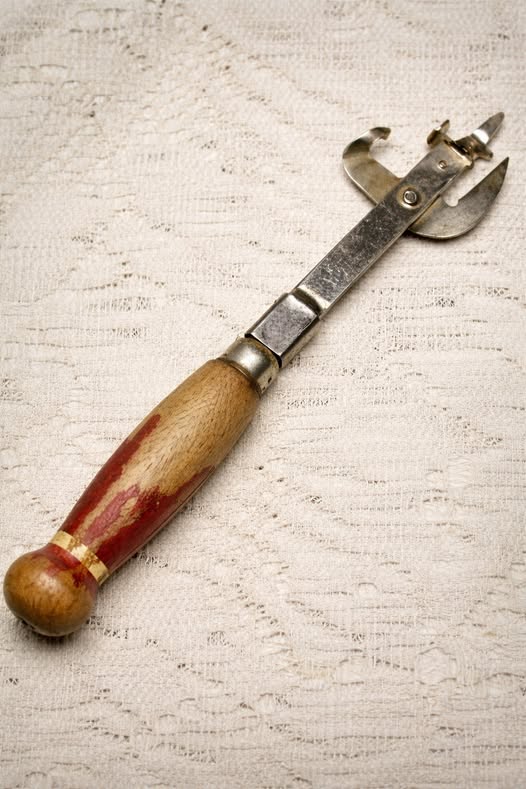
It began, as so many modern internet mysteries do, with a single unsettling image and a caption that barely explained it.
A photograph surfaced online: a small, rusted metal object pulled from a deceased grandmother’s kitchen drawer. At first glance, it didn’t look like a kitchen tool at all. It looked sharp. Jagged. Almost hostile in its design—more like something salvaged from a battlefield than something meant to prepare dinner. One user called it “a murder tool,” and that phrase alone was enough to ignite the internet.
Within hours, the post spread across forums and social media threads. Curiosity quickly gave way to obsession. People zoomed in on the photo, analyzing every edge and curve. Some insisted it had to be a weapon. Others swore they had seen something similar in their own grandparents’ homes but had never questioned it before. The mystery deepened not because the object was unknown—but because it was disturbingly familiar.
Then the stories started pouring in.
Reddit threads filled with fragmented memories: childhood moments of watching adults struggle in the kitchen, sudden slips of metal, startled cries, bandaged fingers, and the sharp smell of canned food mixed with frustration. People began recalling dinners prepared in kitchens where tools didn’t forgive mistakes. The conversation grew heavier, more personal. What started as curiosity slowly turned into a collective excavation of forgotten domestic history.
And then, the answer emerged.
It wasn’t a weapon at all. It was an old-style puncture can opener—an early design used long before modern, smooth-turning wheels and safety blades became standard. This tool didn’t glide along the edge of a can like today’s versions. Instead, it demanded force. You pressed it down to pierce metal, twisted carefully to carve a jagged opening, and hoped your grip didn’t slip in the process. It was efficient in its own way, but unforgiving—built in an era when kitchen work assumed strength, patience, and a tolerance for risk.
For many younger viewers, the revelation was shocking. Something so dangerous-looking had once been completely ordinary. But for older generations, it triggered something else entirely: recognition, memory, even a faint sense of pride. It was a reminder of kitchens where every tool required respect, and where small injuries were often considered just part of the process.
As the conversation widened, the object transformed in meaning. It was no longer just a strange artifact from a drawer. It became a symbol of a different domestic world—one where convenience had not yet softened every edge, and where daily life quietly accepted hazards we would now consider unacceptable.
Mandoline slicers without guards. Knives stored loosely in drawers. Open flames without sensors or automatic shutoffs. Tools that demanded skill rather than shielding users from consequence.
The “murder tool,” as the internet half-jokingly continued to call it, turned into something far more reflective than its appearance suggested. It exposed how much everyday life has changed—not just in design, but in expectation. Modern tools aim to prevent harm at every turn, smoothing out risk until it is almost invisible. But in doing so, they also erase a certain rawness that once defined domestic labor.
In the end, that rusted can opener was never about danger itself. It was about a time when danger was simply folded into routine—quiet, accepted, and rarely questioned. And in rediscovering it, the internet wasn’t just reacting to a strange object. It was confronting a past where even the most ordinary tasks carried a trace of steel, effort, and the possibility of a cut you were expected to shrug off and keep going.