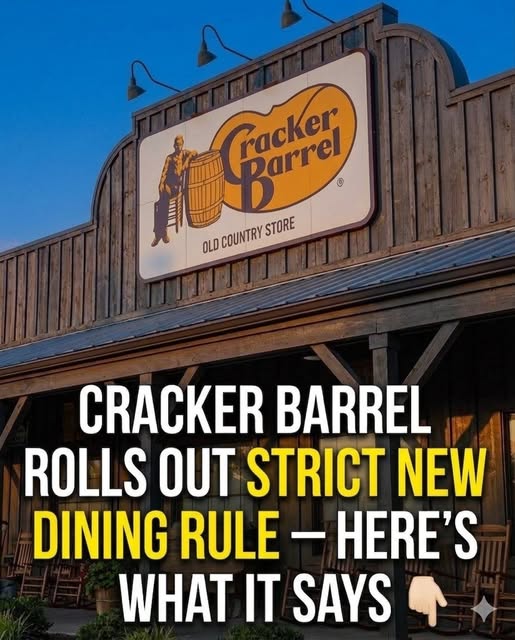
For millions of American families, Cracker Barrel has never been just another place to eat. It has been a ritual stitched into road trips, Sunday drives, holiday journeys, and childhood memories. The moment you spot the familiar wooden rocking chairs lined up on a wide front porch, you already know what’s coming: the comforting scent of home-style cooking, the warm glow of lantern-style lighting, and a dining room filled with the nostalgic charm of a country store frozen in time.
For decades, this experience felt unchanged—reliable, familiar, almost like stepping into a memory rather than a restaurant. That consistency became the brand’s greatest strength. So when the company began introducing updates—a refreshed logo, redesigned interiors, and subtle modern touches—it was never just a design decision. It was a cultural shockwave.
To executives, these changes were about survival and relevance in a fast-evolving restaurant landscape, where customer expectations, competition, and aesthetics shift constantly. The intention was to preserve the essence of the brand while gently modernizing it for new generations. But for many longtime guests, even the smallest alteration felt deeply personal. A logo redesign wasn’t just a graphic update—it felt like the rewriting of a shared story. A slightly brighter interior wasn’t just lighting—it felt like the dimming of nostalgia itself.
As images of redesigned spaces and updated branding circulated online, reactions intensified. Loyal customers voiced frustration, some expressing that the “old charm” was disappearing one detail at a time. What might have been seen internally as incremental improvement became, in the public eye, a debate about identity: was a beloved roadside institution slowly drifting away from what made it special?
Behind the scenes, however, the story was far more complex than the online outrage suggested. Internal discussions reportedly centered on balancing heritage with efficiency, consistency with modernization, and tradition with operational clarity. Design choices were debated carefully, with teams weighing how far change could go without disrupting the emotional connection that defined the brand.
At the same time, scrutiny extended beyond aesthetics. Questions surfaced regarding internal practices, including employee travel guidance and how staff expenses were handled. In response, the company worked to clarify that certain recommendations were intended as flexible guidelines rather than strict mandates. Policies were reviewed, communication was tightened, and reimbursement expectations were made more transparent—an effort to ensure that everyday operations matched the trust the brand had built with both employees and customers.
Gradually, adjustments were made. Some familiar visual elements quietly returned, reinforcing the sense of warmth and tradition that customers cherished. Yet behind those visible touches, modernization efforts continued—less noticeable, but ongoing—aimed at improving efficiency, consistency, and long-term sustainability.
In the end, the Cracker Barrel story reflects something larger than a single brand. It reveals the delicate tension every iconic company faces: how to evolve without erasing the emotional history that made people care in the first place. Change is necessary for survival, but when a brand is built on memory, even the smallest shift carries enormous weight.
And perhaps that is the true lesson—icons don’t stay icons by standing still, but they also don’t survive by forgetting who they were.