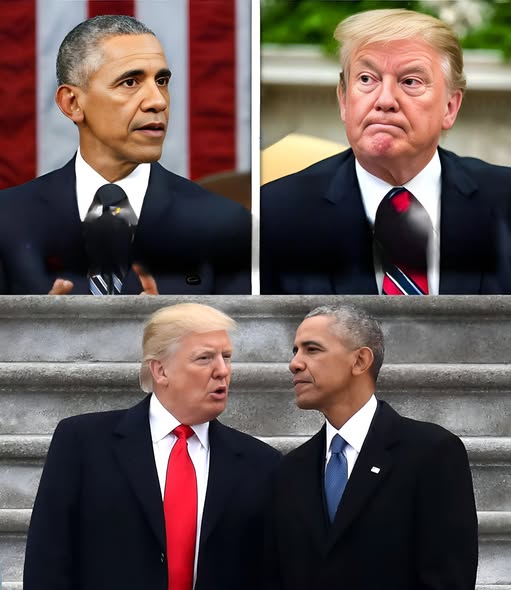
The moment Donald Trump fixed his gaze on Barack Obama, the energy in the studio shifted, almost imperceptibly at first, then with a chilling clarity. Cameras rolled, lights glared, and for a heartbeat, the usual rhythm of a cable interview—a sequence of questions, rehearsed smiles, polite nods—fractured. What followed was anything but routine. Viewers at home felt it immediately: a televised confrontation that seemed to slip past the scripts, the talking points, and into something raw, personal, and uncomfortably intimate. By the time Trump’s words landed, the screen was no longer just a screen—it was a battlefield, and every viewer an unwitting witness. Within minutes, social media erupted, a digital echo chamber vibrating with outrage, defense, ridicule, and awe. The nation fractured into opposing camps, each insisting that they alone understood the truth of what had just transpired.
What started as a standard cable segment became a microcosm of modern political theater: unscripted yet meticulously strategic, instantaneous yet infinitely replayable. Trump’s criticism of Obama cut deeper than a simple reflection on past policies or presidential decisions; it was a carefully calibrated performance aimed at a hyperconnected audience, one that thrives on immediacy, controversy, and shareable outrage. Supporters celebrated his boldness, praising the candor they felt had been absent in political discourse for years. Critics condemned what they saw as unchecked incivility, a lowering of standards in public conversation. Meanwhile, millions of viewers dissected every word, every smirk, every pause, turning facial expressions into clues, syllables into evidence of motive and meaning.
But the real story was not in the words themselves, nor in the reactions they provoked—it was in the system they revealed. The clash laid bare the strange, volatile fusion of live television and social media, a world in which perception often outruns context, and outrage can drown out substance. Leadership, it seemed, was no longer measured solely by policy decisions, strategic acumen, or historical impact. Instead, it was judged by how conflict could be framed, amplified, and remembered in the endless scroll of a 24-hour news cycle. The interview was less an isolated spectacle and more a harbinger of a new political reality: a reminder that in today’s media ecosystem, every word, glance, and gesture can become a weapon, every broadcast a battlefield, and every viewer a participant in shaping history as it unfolds.