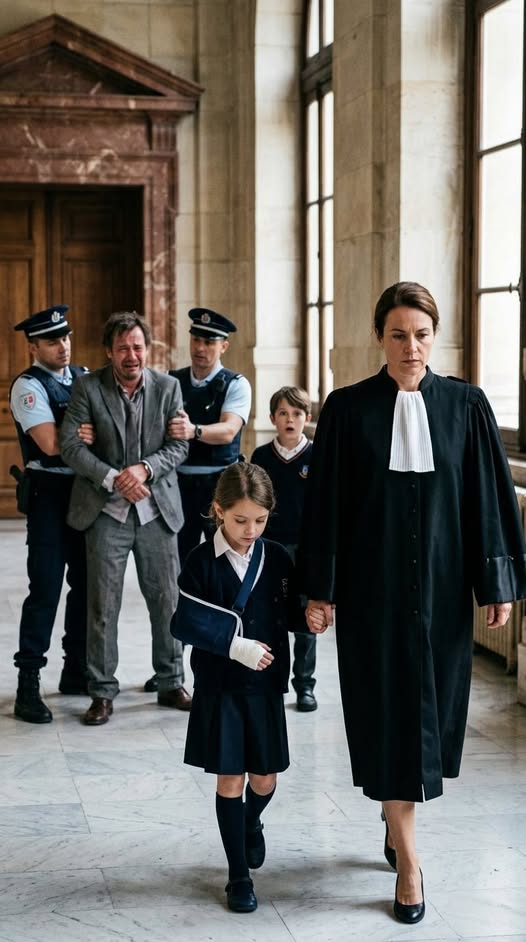
The dragon woke in silence—but what followed was anything but quiet.
It began in a place that was supposed to be safe. A children’s hospital ward filled with soft fluorescent light, the smell of antiseptic, and the fragile hope of parents who believed rules still mattered. Then came the snap—sharp, sudden, undeniable. A child’s arm shattered under force disguised as “horseplay,” pain erupting instantly into a bruise blooming deep purple beneath the skin. The boy who caused it didn’t flinch. He didn’t apologize. He only smiled.
Because he had learned something early in life: consequences were for other people.
He was the kind of child who floated above accountability, carried by the invisible shield of wealth and reputation. His father’s name opened doors, closed investigations, and smoothed over every uncomfortable question before it could grow teeth. Teachers lowered their eyes when he walked by. Administrators adjusted their stories. Adults, the very people meant to protect children, rehearsed excuses on his behalf.
So when he laughed—loud, careless, almost curious at the idea of justice—it wasn’t ignorance. It was confidence. A practiced arrogance that came from never being made to stand still long enough to feel fear.
He taunted the word itself like it was a joke. “Justice,” he repeated once, rolling it on his tongue as if it were something foreign, something irrelevant. And then he smirked, as if the world had already agreed with him.
But he miscalculated one thing.
He did not notice the mother sitting in the corner chair of the ward. She wasn’t dressed like the others who belonged there. Her shoes were worn, her coat slightly faded, her hands still trembling from holding her daughter through the worst of the pain. She looked ordinary—forgettable, even. The kind of person people speak over rather than to.
And that was exactly why they underestimated her.
She had nothing left to lose.
When she finally stood, it wasn’t dramatic. No shouting. No collapsing grief. No emotional collapse that made others rush in to “manage” her. She simply walked out of the ward with a quiet, steady motion that unsettled even the nurses who pretended not to notice what had happened.
And something in her eyes had changed.
It was not rage in the way people expected. It was clarity. Focus. The kind of fire that doesn’t flare wildly—it burns clean, controlled, and unrelenting.
From that moment forward, she did not waste energy on pleading. She did not beg for fairness in rooms that had already decided to ignore her. Instead, she listened.
She listened to everything.
Every dismissive laugh about her “discount store” shoes echoed in her memory like evidence being recorded. Every whispered insult about her daughter being a “scholarship charity case” became another thread in a larger pattern she was quietly mapping. Every polite but hollow assurance—“This will all go away if you’re smart”—was preserved, analyzed, and stored like a confession.
While they saw a grieving mother, she became something else entirely.
Behind the scenes, she moved with precision. Phone calls were made at odd hours. Documents were requested, rechecked, cross-referenced. Medical records were secured before they could be softened. Security footage that “didn’t exist” was traced through backups and secondary servers. Financial trails, once hidden behind layers of institutional respectability, began to surface like ink bleeding through paper.
And most importantly, she started documenting everything. Not just what was done—but who allowed it to happen. Who stayed silent. Who signed. Who benefited. Who nodded.
She was no longer reacting to the system.
She was mapping it.
The deeper she went, the clearer it became that the incident in the hospital was not isolated—it was protected. Not just by one boy and his powerful father, but by a network of quiet agreements, unspoken favors, and carefully maintained reputations.
Her grief did not break her.
It refined her.
It turned trembling hands into steady ones. It turned late-night tears into early-morning strategy. It turned pain into something structured, something usable.
By the time the Judicial Marshals arrived at the principal’s office, the world inside that building no longer belonged to the people who thought they controlled it.
The door didn’t open so much as it surrendered.
Officials who had once rehearsed polite denials now found themselves confronted with folders they had never seen, timestamps they couldn’t explain, sworn statements they had hoped would never exist. Conversations that had been buried in private rooms were now laid out in sequence, forming a chain too strong to casually dismiss.
And at the center of it all was her—calm, composed, unshaken.
She had already dismantled what they believed was untouchable. Not in a single strike, but piece by piece, affidavit by affidavit, truth by inconvenient truth.
The boy who once laughed at consequences sat frozen as his world inverted. His father’s name—once spoken with respect in boardrooms and charity galas—began appearing in places it was never meant to be: indictments, investigations, and public records that no amount of influence could erase.
The illusion of immunity cracked.
And through that crack, reality poured in.
Lily’s cast eventually came off. The hospital visits slowed. The bruises faded into memory. But beneath the healed skin, something remained—an invisible mark that did not fade with time.
A vow.
Her mother knelt beside her one evening, gently touching the spot where pain had once lived, and spoke softly—not as a warning, but as inheritance.
“Power,” she said, “is not what they hoard in banks or hide in backrooms. It’s not their name, or their money, or the fear they try to buy from others.”
She paused, eyes steady.
“It’s the courage to stand up and say: this ends with me.”
And in that moment, the dragon did not sleep again.