The night my son hurled those words at me, it didn’t feel like an argument—it felt like something inside my chest quietly collapsing. His voice still echoes in my mind, sharp and certain, as if I were nothing more than an inconvenience he was finally ready to erase. By the time the penthouse door shut with a final, indifferent click, I stood alone in the hallway under cold marble lights, convinced I had been erased from my own life. Not just my home, but my place in the world, my dignity, my identity as a mother—all of it seemed to dissolve in a single moment.
I remember clutching the only thing left to me: a small brass key. It felt absurdly light for something that was supposed to carry so much meaning, like a joke I didn’t yet understand. A forgotten industrial garage on the edge of the city—that was all I had been given. Or so I believed. In that moment, I thought I had been discarded, set aside like something old, useless, and easily replaced. The silence that followed was worse than the words themselves.
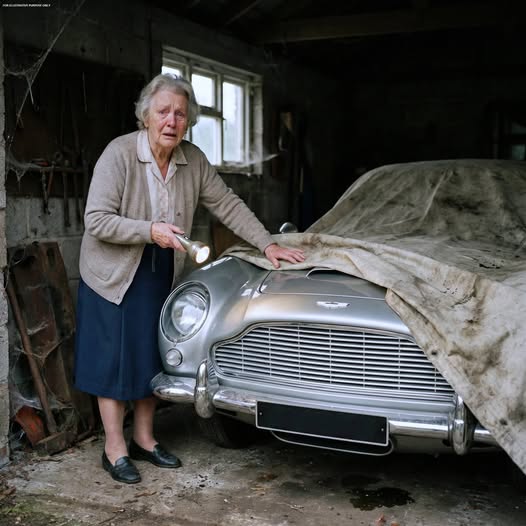
I walked into that garage expecting decay—rusted metal, broken concrete, the smell of abandonment clinging to every surface. Instead, I stepped into something that made me stop breathing for a moment. It wasn’t empty. It was alive in a quiet, hidden way. A private world carefully built in secrecy, as though someone had been waiting for this exact moment in my life. Classic cars stood beneath soft lighting like preserved memories, polished to a quiet perfection. The air itself felt controlled, intentional, almost sacred in its stillness. And then I saw it—a letter, placed deliberately in my husband Robert’s unmistakable handwriting, waiting as if he already knew I would one day arrive here broken enough to need it.
As I read his words, the confusion slowly gave way to something heavier: understanding. He had seen it long before I allowed myself to see it—the subtle hunger in our son, the entitlement growing behind polite smiles, the quiet erosion of love replaced by calculation. What I had experienced as humiliation at the will reading, as abandonment and rejection, was never meant to destroy me. It was a barrier he had built with painful foresight, a shield designed not to trap me—but to protect me from what was coming.
In the days that followed, I learned a different kind of life. Trusts, properties, decisions that once felt foreign began to take shape in my hands. I stopped shrinking when I spoke. I stopped questioning whether I belonged in rooms where my name already carried weight. The words my son once used—“useless old woman”—no longer pierced me the way they did that night. They lost their authority, their sting, their imagined truth.
Jonathan kept his penthouse, his assumptions, and the version of reality he preferred. I chose something quieter, but far stronger: clarity, independence, and peace that didn’t require permission. In that unlikely sanctuary of steel, silence, and hidden legacy, I discovered something neither of them could give me or take away. My worth had never been defined by their approval—or their rejection. It had been mine all along, waiting beneath the noise to be remembered.