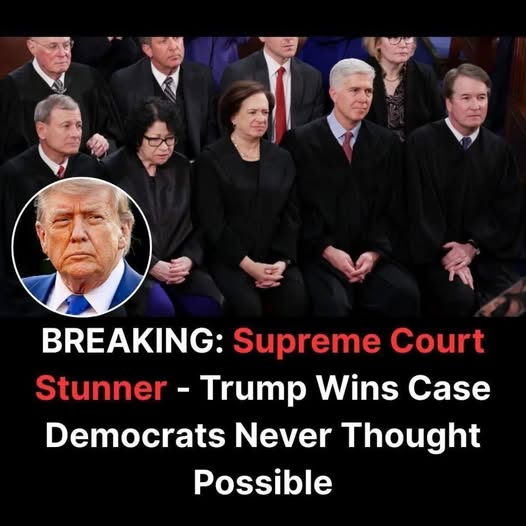
The Supreme Court’s ruling struck like a thunderclap, sending shockwaves through the nation’s legal and immigrant communities. In a single, sweeping decision, the Court handed former President Donald Trump a powerful legal tool that could transform immigration enforcement in Los Angeles and beyond. For critics, it is a dangerous license to profile; for supporters, it is a commonsense measure long overdue. But the implications go deeper: for the first time, ethnicity itself may be considered a factor that triggers an ICE stop, putting millions of residents under the looming shadow of suspicion. Rights, fear, families—all are now entangled in a legal framework that some see as alarmingly permissive.
This decision doesn’t simply adjust the mechanics of immigration enforcement; it redraws the fragile boundary between public safety and civil liberties. By permitting authorities to treat ethnicity, language, and neighborhood as “relevant factors” in immigration stops, the Court signaled a new tolerance for suspicion grounded in identity. Justice Brett Kavanaugh defended the ruling as deference to precedent and an application of “common sense.” Yet for the millions of immigrants—and U.S. citizens who share their appearance—the judgment lands less as legal reasoning and more as a warning flare over their daily lives.
In Los Angeles, where families of mixed immigration status are woven into the city’s social fabric, the human toll could be profound. The psychological impact may rival the legal implications. Communities that already view law enforcement with caution now face the fear that routine interactions—traffic stops, public encounters, even casual questions—could escalate into immigration scrutiny. Supporters insist the ruling restores the government’s ability to enforce the law fairly. Opponents argue it opens the door to normalized ethnic profiling, turning ordinary citizens into suspects based solely on how they look, where they live, or the language they speak.
The ruling raises a fundamental question: how far is America willing to let fear reshape its understanding of justice? As lawyers, activists, and families grapple with the implications, the streets of Los Angeles may become the testing ground for a new era of enforcement—one where identity itself can dictate who is safe, who is vulnerable, and who must constantly look over their shoulder.