The room didn’t burst into laughter. It froze first.
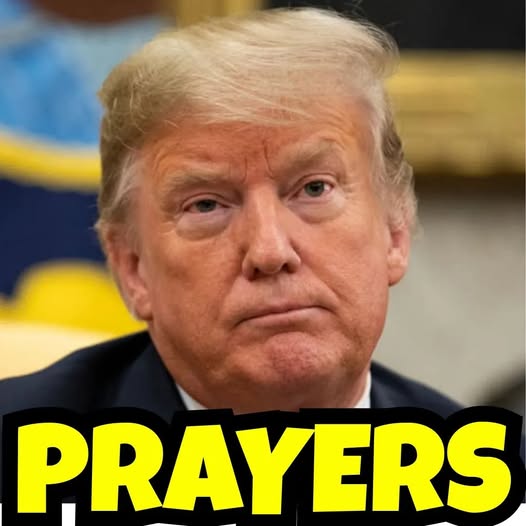
For a heartbeat—just a thin, fragile second—the air tightened. Then came the grin. Donald Trump flashed it the way he always does, calibrated and confident, the familiar smirk of a man who knows how to command a stage. He tilted his head slightly and delivered the line: he was “the bottom of the totem pole.” A self-own, light and disarming. A joke at his own expense. The kind of thing politicians almost never risk.
Then, without missing a beat, he added the twist: if he ended the war, “maybe they’ll let me in.”
The crowd laughed.
But it wasn’t clean laughter. It didn’t roll out warm and effortless. It came in fragments—late, uneven, edged with something brittle. It was the sound of people trying to decide whether they had just heard a joke or something far more revealing. It was laughter with a question mark at the end.
Because for a split second, the mask seemed to slip.
In that offhand reference to being “at the bottom of the totem pole,” Trump did something he rarely allows himself to do in public: he acknowledged hierarchy. Not dominance. Not mastery. Not control. But placement—low placement. Whether he meant it sincerely or not almost didn’t matter. The phrasing itself was jarring. It hinted at exclusion. At being outside the circle. At knocking on a door that hadn’t opened.
The audience felt it before they processed it. That’s why the laughter hesitated. That’s why it arrived jagged at the edges. They were adjusting in real time to a version of him that didn’t quite fit the script.
Then came the second half—the line that lingered long after the chuckles faded.
“If I end the war, maybe they’ll let me in.”
It was delivered like a punchline. But it landed like a confession.
Embedded in that single sentence was a transactional worldview distilled to its essence: one grand act, one sweeping triumph, and the gates swing open. Recognition earned not through steady coalition-building or ideological persuasion, but through spectacle. Through a dramatic, singular victory. End the war. Close the deal. Get the prize.
And what was the prize? Entry. Acceptance. Validation.
“Let me in.”
Those three words hovered in the air longer than the joke allowed. Let me in where? Into history’s good graces? Into elite approval? Into a club that he simultaneously criticizes and courts? The ambiguity made it more revealing, not less.
The crowd laughed again, louder this time—as if to smooth over the discomfort. As if to insist this was all theater. Because if it was only theater, there was nothing to examine. Nothing to interpret. Nothing to worry about.
But the unease didn’t fully dissolve.
For a fleeting instant, the bravado gave way to something else: a glimpse of aspiration wrapped in grievance, ambition tinged with exclusion. The persona of unassailable dominance flickered, and behind it stood a man framing global conflict as a key to personal redemption.
Then the performance resumed. The rhythm returned. The grin settled back into place.
And yet, for those who were paying attention, that brief pause—the freeze before the laughter—said more than the joke ever could.