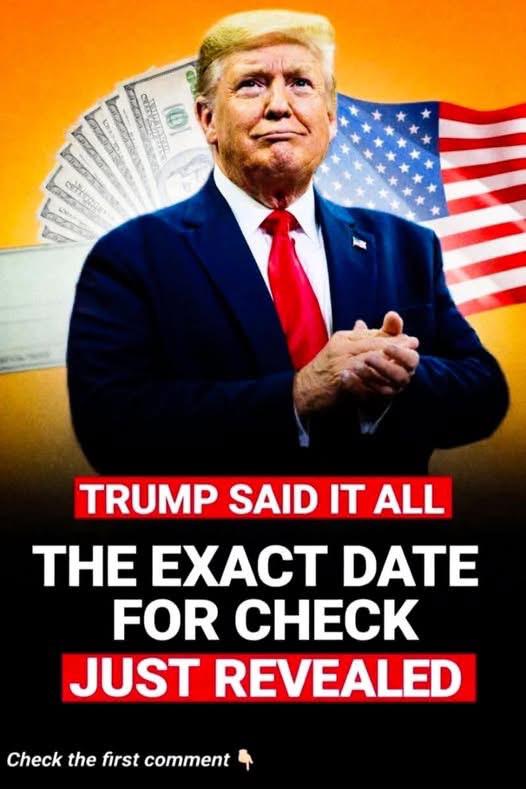
The promise crackled through rallies and headlines like a bolt of political lightning: $2,000 checks for Americans — paid for by tariffs, no new taxes, no complicated paperwork, no hidden trade-offs. It was pitched as effortless relief, money that would simply appear, as if the federal government had discovered a hidden vault overflowing with cash. For millions of families squeezed by rising prices, it sounded irresistible — a dividend for enduring hard times, a reward without sacrifice.
But behind the applause and applause lines lies a far more complicated reality. The math is stubborn. The law is slower than campaign slogans. And the courts are watching.
At the heart of the proposal is a bold claim: that tariffs can function like a presidential ATM — a revenue stream the White House can turn on and off at will. The narrative suggests that by taxing foreign imports, the government can collect vast sums and redirect them straight into the pockets of American households. It feels simple. Clean. Almost ingenious.
Except it isn’t.
The revenue generated by recent tariffs amounts to only a fraction of what would be required to fund $2,000 checks on a national scale. Even more problematic, much of that money is entangled in ongoing legal disputes. Businesses have challenged the legality of certain tariffs, arguing they were imposed through expansive interpretations of emergency powers. If the Supreme Court ultimately decides those powers were overstepped, the consequences could be dramatic: instead of issuing rebate checks to voters, the government might be ordered to refund billions of dollars to importers who paid the tariffs in the first place.
In that scenario, the promised windfall doesn’t just shrink — it reverses direction.
And even if the courts were to uphold the tariffs, the political path forward remains anything but smooth. Congress would have to step in. Lawmakers would need to draft and pass legislation spelling out the fine print: Who qualifies as a “working family”? Where does the income cutoff begin? Would the aid arrive as a direct check, a refundable tax credit, or some other mechanism entirely? Would higher earners be excluded? Would the payments be one-time or recurring? Every one of those questions invites negotiation, amendment, delay.
In Washington, grand announcements are only the beginning. The real test is whether they can survive the collision with budget constraints, legal scrutiny, and legislative compromise.
For now, what many Americans hold is not a check but a familiar feeling — a sense of déjà vu. A sweeping promise delivered with confidence from behind a podium. A headline-grabbing figure designed to inspire hope and dominate the news cycle. And then, slowly, the friction of governance sets in: court filings, committee hearings, fiscal analyses, procedural votes.
The idea of $2,000 checks funded by tariffs may be politically potent. But until it clears the hurdles of math, law, and Congress itself, it remains less a dividend and more a declaration — powerful in rhetoric, uncertain in reality.