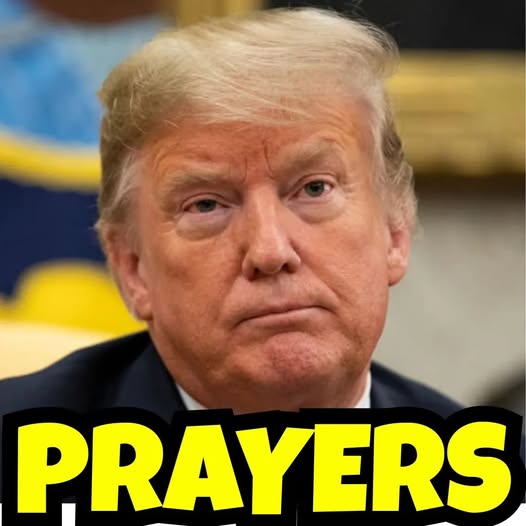
The room froze for a beat before it laughed. Not the easy, reflexive laughter of a well-oiled rally crowd, but something delayed, brittle, as if everyone had briefly lost the script. Trump grinned through it, that familiar flash of confidence, and brushed the moment aside by calling himself “the bottom of the totem pole.” Then, almost offhandedly, he added that if he ended a war, “maybe they’ll let me in.”
The line got a laugh—but it wasn’t clean. It carried an edge of uncertainty, a nervous ripple that moved unevenly through the room. People chuckled because that’s what they were supposed to do, because silence would have felt heavier, more dangerous. For a fraction of a second, the performance faltered, and everyone felt it.
In that remark about being “at the bottom of the totem pole,” something rare slipped through. Trump, a figure built almost entirely on projection—dominance, inevitability, invincibility—briefly acknowledged vulnerability, or at least the optics of it. He framed it as a joke, but the admission lingered. The crowd hesitated, unsure whether they had just heard self-deprecation or something closer to resentment. Their laughter came late, uneven, with jagged edges, as if they were trying to laugh over a thought they didn’t want to finish.
Then came the second half, the part that truly hung in the air: if he ended the war, “maybe they’ll let me in.” It was delivered like a punchline, but it didn’t land like one. It sounded less like humor and more like a quiet confession, a glimpse into how he sees the world—power as access, peace as currency, history as a locked room he’s still trying to enter. The promise wasn’t framed in terms of moral responsibility or global stability, but as a transaction: one monumental act in exchange for recognition, validation, belonging.
The audience laughed again, louder this time, but the laughter felt defensive. It was the sound of people choosing comfort over clarity, amusement over interrogation. Because to pause and ask what he meant—to really sit with it—would have required confronting the strange intimacy of the moment. For just an instant, the joke had cracked open the performance, and something unguarded had looked back at them.