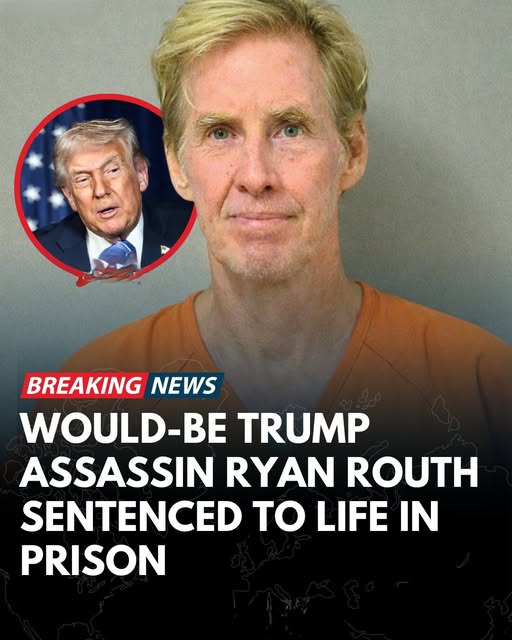
The rumors raced ahead of reality, spreading faster than facts could ever hope to catch up. Fragmented online reports describing an alleged assassination attempt against Donald Trump — followed by news of an unusually harsh sentence — detonated across social media and news feeds alike. Within hours, the story had morphed into something larger than the incident itself: a volatile mix of fear, outrage, and suspicion. Was this a necessary act of justice in a dangerous moment, or a carefully staged display of political power delivered with a judge’s gavel? As clarity lagged behind speculation, public trust thinned, and one unsettling question refused to fade into the background.
Even now, with key details of the supposed plot still unverified or incomplete, the public reaction tells its own story. It reveals a nation stretched thin, bracing for impact, where political violence no longer feels distant or unthinkable. For many Americans, the idea of an attack on a major political figure no longer registers as shocking — it feels plausible. That shift alone speaks volumes. Against this backdrop, the justice system finds itself under an unforgiving spotlight. Supporters of severe punishment argue that when democratic institutions and high-profile leaders are targeted, the response must be swift and uncompromising. In their view, harsh penalties serve not only as punishment, but as a warning — a deterrent meant to draw a bright, immovable line.
Yet an equally forceful counterargument has emerged. Critics warn that allowing rumors to drive conclusions risks doing lasting damage to the very foundations of democracy. They argue that justice rushed is justice weakened, and that punishment delivered before full transparency only deepens public cynicism. Calls for restraint, verified evidence, and strict adherence to due process grow louder, rooted in the belief that democratic systems must not abandon their principles when fear is at its peak. If the rule of law bends too easily under pressure, they ask, what separates justice from spectacle?
In the end, the most consequential story may not be the alleged plot at all. It may be what this moment exposes about a society living in constant political alert — quick to assume the worst, eager for decisive action, yet deeply uncertain about whom to trust. Our reactions, our laws, and our willingness to slow down in the face of panic may reveal more about the direction we are heading than any single case ever could.