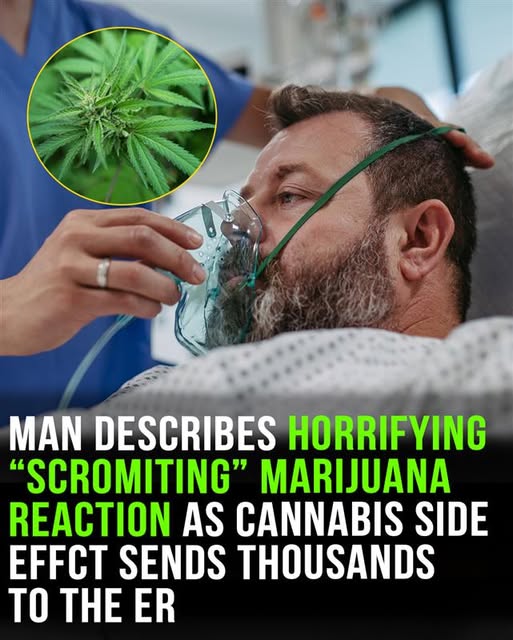
The first wave hits without mercy. Your stomach knots into something unrecognizable, your throat scorches, and before you can even make sense of what’s happening, you’re on the bathroom floor—shaking, sweating, screaming between violent, uncontrollable bouts of vomiting. Minutes blur into hours. Nothing stays down. Not water. Not medicine. Doctors try everything they know, but the usual drugs don’t touch it. Emergency rooms become familiar. Hot showers—scalding, endless—turn into the only fragile relief, a strange ritual that feels less like comfort and more like survival.
You tell yourself it has to be food poisoning. A virus. Stress. Anything but weed. Cannabis is supposed to help, not hurt. It’s natural. It’s calming. It’s the thing you’ve used to sleep, to eat, to quiet your mind. So when the episode finally fades, you push the thought away. You recover. You go back to your routine. And then, weeks or months later, it comes back—again and again—each time more brutal, more terrifying, more certain that something is deeply wrong.
For years, cannabis has been marketed as a harmless escape: a plant instead of a pill, a remedy instead of a risk. But for thousands of heavy or long-term users—especially those who started young—that promise quietly collapses into a nightmare called Cannabis Hyperemesis Syndrome. Life begins to shrink around the fear of the next attack. Every plan is provisional. Every meal feels risky. Every smoke session carries a silent countdown. Jobs are lost to hospital visits and sick days no one can explain. Relationships strain under the weight of unpredictability and disbelief. Worst of all, trust in one’s own body slowly erodes.
What makes CHS especially cruel is the sense of betrayal. The very substance people leaned on for anxiety, sleep, appetite, or pain becomes the source of relentless suffering. Many cling to denial, cycling through elimination diets, detoxes, supplements, and new strains—anything to avoid confronting the possibility that the one thing they rely on is the cause. Some are misdiagnosed for years, bouncing between specialists while the attacks keep coming.
Healing begins only when someone finally dares to say the unthinkable out loud: it’s the weed. And saying it isn’t easy. Letting go isn’t just quitting a habit—it’s grieving a coping mechanism, an identity, a sense of control. But for those who do, something slowly returns: stability, clarity, and the quiet relief of waking up without fear. Recovery isn’t instant, but it’s real. And it starts with choosing to believe that life can feel safe again—without the thing that once promised escape.