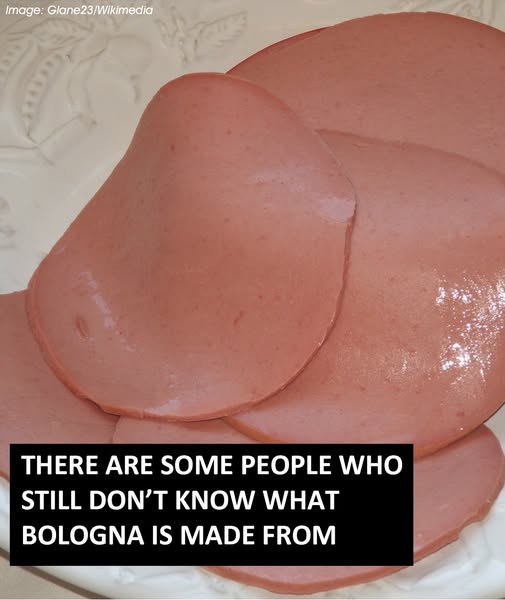
Bologna hides a secret most people never stop to question. It shows up quietly in brown-bag lunches and late-night snacks, draped over cheap white bread, folded into glossy, neon-pink circles that seem to exist outside of time. We feed it to children without a second thought. We joke about it as “junk food,” laugh at its color, its smell, its reputation—and yet, generation after generation, we keep buying it. There’s something oddly persistent about bologna, something familiar enough to feel safe and strange enough to feel suspect. But what if the story behind that smooth pink slice is far older, more deliberate, and more tightly controlled than you ever imagined?
Despite its reputation as mystery meat, bologna is not some chaotic slurry of leftovers. It’s the modern, industrial descendant of a very old tradition. At its core, bologna is sausage—carefully regulated, legally defined, and engineered for consistency. Today’s versions are typically made from beef, pork, chicken, or a blend of these meats, finely ground until the texture becomes silky and uniform. The mixture is emulsified, seasoned, and cooked, sometimes smoked, inside either natural or synthetic casings. The result is that unmistakable slice: smooth, elastic, and identical every single time.
The horror stories people love to tell—beaks, hooves, floor sweepings—say more about cultural anxiety than reality. In the United States, strict labeling laws and consumer expectations mean that most mass-produced bologna is made from standard cuts of meat and fat, not the grotesque scraps of urban legend. It’s processed, yes. It’s engineered for shelf life and cost efficiency, absolutely. But it isn’t the culinary crime scene people imagine. It’s a product shaped by regulations, economics, and decades of demand for cheap, reliable protein.
To understand where bologna truly comes from, you have to look across the Atlantic. Its ancestor, mortadella, is a celebrated Italian sausage from Bologna, Italy—rich, aromatic, and unapologetically indulgent. Mortadella is studded with visible cubes of pork fat, scented with spices, dotted with peppercorns, and sometimes elevated with pistachios. It’s sliced thick, served proudly, and treated as craftsmanship. American bologna took that idea and stripped it down, smoothing out the texture, muting the flavors, and standardizing the form to suit factory lines and mass consumption.
Read the ingredient label and the illusion dissolves. You’ll find meat, fat, spices, sweeteners, and preservatives—nothing magical, nothing monstrous. Bologna isn’t a health food, and it never pretended to be. But it isn’t a mystery either. It’s a processed comfort, a cultural contradiction we love to mock while continuing to crave. A food we pretend to be above, even as it keeps finding its way back onto our plates, quietly reminding us that familiarity is often more powerful than fear.