The heavy spoon looked harmless.
It wasn’t.
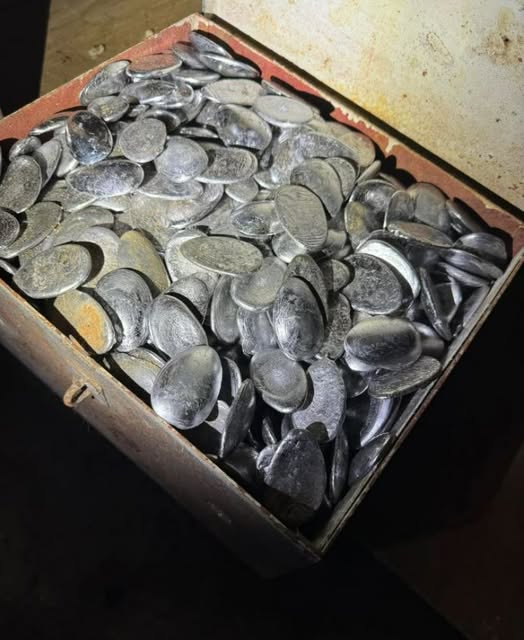
At first glance, it could have been mistaken for any other kitchen relic—darkened, thick-necked, scarred by years of heat. But this cast-iron spoon was never meant for soup or stew. It belonged to a quieter, more intimate tradition, one that flickered in the glow of open flames long before factory lines and store-bought certainty took over. Once, in homes scattered across rural America, families used tools like this to melt scrap lead, shaping their own bullets and fishing weights by hand.
This wasn’t industry. It was survival, practiced slowly and deliberately.
In farmhouses and small-town backyards, the spoon became the centerpiece of long evenings where time seemed to stretch. Lead salvaged from pipes or worn-out parts was gathered carefully, placed into the bowl, and held over fire until it softened and gleamed. Molds waited nearby. So did children—close enough to feel the heat, far enough to know this work demanded respect. They watched in silence, absorbing lessons that were never written down: patience, caution, responsibility. They learned that food on the table and protection in the field didn’t always come from a store. Sometimes, they came from your own hands.
It was dangerous, yes. But it was also precise. Intentional. Human.
These moments did more than produce ammunition or sinkers. They stitched families together through shared focus and quiet trust. Parents passed down not just technique, but confidence—the belief that you could face uncertainty and shape something useful out of raw material. Pride was poured alongside the molten metal, cooling into something solid and lasting.
Today, when these heavy spoons resurface in antique shops or online listings, they’re often mislabeled as curiosities or décor. But for those who recognize them, they carry weight far beyond iron. They are artifacts of a time when self-reliance wasn’t a slogan, but a daily practice. When knowledge lived in calloused hands. When survival wasn’t abstract—it was personal.
That unassuming spoon was never harmless.
It was powerful.