Here’s a longer, more vivid, and more gripping rewrite, keeping the tone dramatic and authoritative while expanding the stakes and narrative flow:
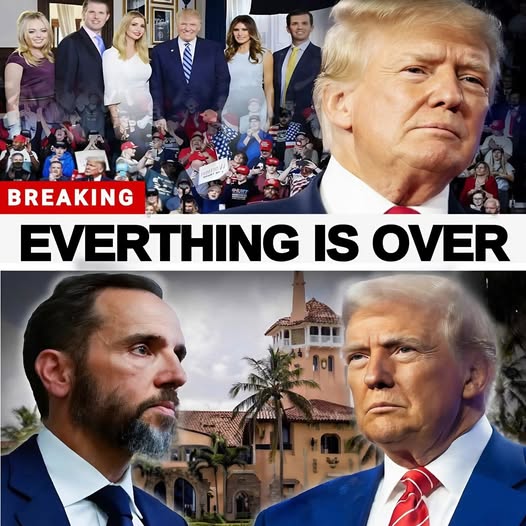
The blow landed before dawn, when Washington was still asleep and the corridors of power were quiet. In the dead of night, Donald Trump’s legal team made a final, desperate attempt to hit pause—to freeze the federal criminal case accusing him of trying to overturn the 2020 election. It was a last-ditch maneuver, the kind reserved for moments when the clock is running out and options are vanishing.
Hours later, the answer arrived. It was swift. It was blunt. And it was devastating.
No.
What followed was not merely a procedural rejection, but a striking rebuke. In a terse yet consequential order, the U.S. Court of Appeals for the D.C. Circuit shut down Trump’s emergency bid to halt the prosecution examining his efforts to cling to power after losing the election. The three-judge panel acted with unusual speed, issuing a unanimous per curiam ruling before most of the city had its first cup of coffee. There were no oral arguments. No extended back-and-forth. No indication that the court saw this as a close call.
The language of the decision carried weight far beyond the immediate outcome. The judges described Trump’s alleged post-2020 conduct as “unprecedented in our nation’s history”—a phrase that reverberates well outside the courtroom. This was not the court treating the case as ordinary political combat or aggressive campaigning pushed too far. It was the judiciary framing the allegations as something fundamentally different: an extraordinary challenge to the constitutional order itself.
That framing matters. By invoking history, the court implicitly rejected the idea that Trump’s actions fall within the normal bounds of presidential power or political dispute. Instead, it cast them as singular, alarming, and without modern parallel—language that underscores the gravity of the charges still moving toward trial.
For prosecutors, the ruling clears a crucial roadblock. It allows the case to continue advancing, keeping alive the possibility that a former president will face a jury over actions taken in the wake of a democratic defeat. For Trump, the decision is a stark reminder that the title he once held does not confer lifelong immunity, and that the courts are not prepared—at least not yet—to grant him special deference.
And for the country, the moment carries broader significance. It signals a judiciary willing to engage directly with the unresolved legacy of January 6, rather than sidestepping it for the sake of political comfort. The ruling does not decide guilt or innocence. But it does make one thing unmistakably clear: the legal reckoning tied to the 2020 election is far from over, and the courts are prepared to let it run its course.