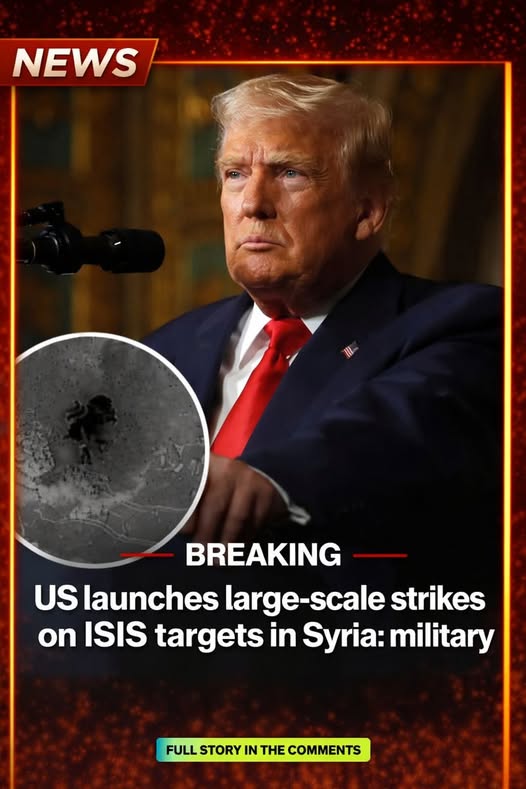
The bombs fell first. Then came the handshake.
As U.S. warplanes tore through ISIS positions across Syria, explosions lighting the night sky and sending shockwaves through already-scarred cities, Washington projected a familiar image of hard power. The strikes were swift, deliberate, and unmistakably American—designed to remind allies and enemies alike that the United States still commands the skies and still reserves the right to shape events on the ground. Yet almost simultaneously, and far from the roar of jet engines, another message was taking shape—one far quieter, far more controversial.
Behind closed doors in Damascus, the Trump administration began doing what once seemed unthinkable: reopening diplomatic channels with Syria and lifting sanctions that had long branded the regime a global pariah. In a single, dizzying turn, U.S. policy appeared to pivot from punishment to partnership, from isolation to negotiation. What unfolded was not merely a tactical shift, but a profound redefinition of America’s posture in one of the world’s most devastating conflicts.
Supporters of the move call it a bold reset—a cold-eyed recognition that years of isolation failed to topple the Syrian government, failed to bring stability, and failed to meaningfully ease civilian suffering. They argue that engaging Damascus, even after years of bloodshed, is the only realistic path forward. Reconstruction, they say, cannot begin without diplomacy. Regional stability cannot be achieved while Syria remains locked out of the global system. From this perspective, lifting sanctions is not forgiveness, but leverage—a chance to trade economic relief for behavioral change.
Critics, however, see something far darker. To them, this was not diplomacy but betrayal. In the ruins of Raqqa and beyond, where entire neighborhoods still lie in rubble and mass graves whisper of past atrocities, the idea of shaking hands with Syria’s leadership feels like an erasure of history. Sanctions were not symbolic gestures, they argue, but moral statements—meant to hold a regime accountable for chemical attacks, mass displacement, and systematic repression. Lifting them risks sending a chilling message: that time, not justice, is the ultimate absolution.
The timing only deepened the controversy. The airstrikes against ISIS allowed the White House to claim continuity and strength, reinforcing the image of a United States unwilling to tolerate terror. But the quiet meeting between Tom Barrack and Syria’s new leadership told a more complicated story—one of calculated risk and uneasy compromise. It was diplomacy conducted in the shadow of warplanes, where military dominance and political pragmatism collided.
At the heart of the decision lies a gamble. By framing sanctions relief as “giving Syria a chance,” the administration is betting that a rebranded regime will truly abandon the worst habits of its past and embrace a new political path. It is a wager on reform over repression, on stability over vengeance. For ordinary Syrians, exhausted by years of war, the stakes could not be higher. This shift could unlock reconstruction, revive shattered infrastructure, and offer a fragile hope of normalcy. Or it could entrench old power structures, rewarding survival rather than accountability and opening the door to renewed abuses.
For the United States, the consequences are equally profound. This move may help stabilize a broken region and curb extremist resurgence. Or it may legitimize a government many still view as complicit in mass suffering, undermining America’s moral authority and alienating allies who believed sanctions were a line that would never be crossed.
History will not judge this moment by intentions, but by outcomes. Whether this was a daring act of strategic vision or a perilous bargain struck too soon remains uncertain. What is clear is that, in Syria, the bombs and the handshake together marked a turning point—one that may redefine not only the future of a shattered nation, but the meaning of power, principle, and compromise in American foreign policy.