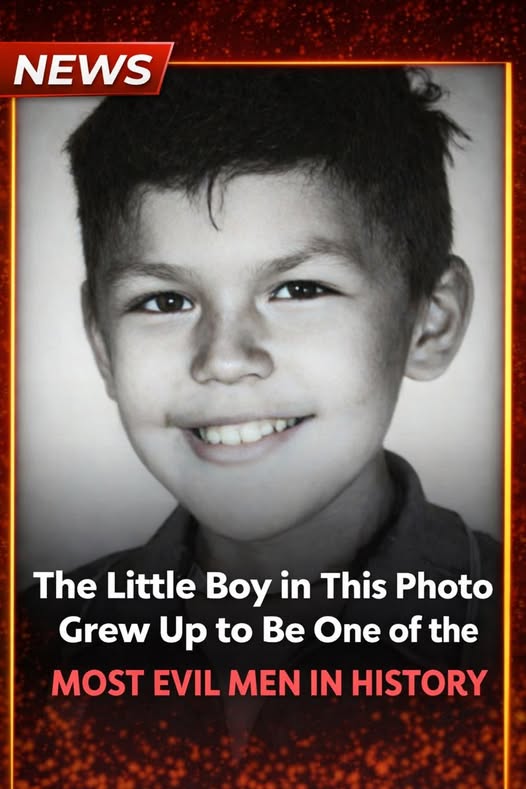
The sweet-faced child frozen in that faded photograph looks almost angelic—wide-eyed, soft-mouthed, innocent in the way only children can be. Nothing in his expression hints at the terror he would one day unleash, or at the sleepless nights he would force upon an entire state. No one studying that picture could imagine that this boy would grow into a figure whose very name would be whispered in fear, whose shadow would turn bedrooms into crime scenes and darkness into a weapon.
His childhood, however, was not gentle. It was steeped in violence, fear, and blood long before the world ever learned to fear him. Poverty pressed in from every side. Brutality was not an exception but a constant presence, woven into daily life until it felt almost ordinary. Still, countless children grow up surrounded by horror and never become monsters. They bend, they scar, they survive. Richard Ramirez did something else entirely—he leaned into the darkness and let it shape him.
Head injuries went untreated, blurring the line between pain and numbness. Long, disturbing hours spent in cemeteries turned crosses and graves into symbols not of peace, but of obsession. Then there was the moment that cracked something irrevocably: his cousin, a man he admired, casually murdering his wife at point-blank range, the act displayed like a lesson rather than a crime. It was violence as spectacle, death as something to be watched, absorbed, and learned from. Around it all swirled drugs, voyeurism, and a growing fixation on control, fear, and domination. Piece by piece, these influences fused, twisting his sense of self and morality into something unrecognizable.
When he finally emerged as the figure the media would call the “Night Stalker,” he wasn’t simply killing. He was performing. He moved through the night with theatrical cruelty, breaking into homes, choosing victims at random, and leaving behind scenes meant to shock and defile. Satanic symbols were carved into flesh and scrawled on walls, not merely as provocation, but as a declaration—a demand that the world witness his transformation and acknowledge the power he believed he had claimed. He wanted terror to be personal, intimate, unavoidable.
For a time, it worked. California held its breath. Windows were locked, lights left on, and sleep became a fragile, dangerous thing. But the mythology he built around himself could not protect him forever. In the end, the fear he unleashed returned to him in the most mundane way imaginable: a city bus, a newspaper headline with his face printed in ink, and a neighborhood that recognized the monster in their midst.
There was no dramatic escape, no final act of control. He was chased, tackled, beaten, and restrained by ordinary people—men and women who refused to look away or run any longer. The hunter became prey, held down by the very hands he had once terrorized. Ramirez lived long enough to hear the verdict that would seal his fate, long enough to sit in a courtroom and absorb the weight of what he had done. But he never lived long enough to face the execution he once claimed he would greet with a smirk.
The little boy from El Paso died much as he had lived—wrapped in darkness, defined by violence, and leaving behind more questions than answers. How does innocence rot into something so unspeakably evil? Where is the line between damage and choice, between being shaped by horror and choosing to become it? His story offers no comfort, only a chilling reminder that monsters are not born fully formed—they are made, piece by piece, in full view of a world that rarely notices until it is far too late.