Donald Trump’s announcement didn’t just make headlines — it stunned the world. What had once been an icy, remote speck on the map suddenly became the hottest front line on the planet, a geopolitical pressure cooker where global powers are poised, nerves are raw, and one strategic misstep could undo 80 years of nuclear restraint. As Washington doubles down on its dream of a new “Golden Dome” sphere of influence in the far north, generals in dimly lit war rooms are whispering about first strikes, red lines, and the terrifying calculus of unintended escalation.
What began as a controversial remark about Greenland has now metastasized into a full-blown geopolitical time bomb. Trump’s fixation on securing control of the vast Arctic island — rich in resources, strategic in location, and home to indigenous cultures older than the United States itself — has transformed a once-obscure territorial debate into a global crisis. Danish and Greenlandic leaders have repeatedly and emphatically declared that Greenland is not for sale — angrily rebuffing any suggestion otherwise — yet the White House has stubbornly reframed control of the territory as a matter of national security and existential necessity.
That rhetoric has sent shockwaves through NATO. Longstanding allies in Europe and North America, once bound together by shared defense treaties and mutual trust, now find themselves scrambling to bolster Arctic defenses. Tanks, fighter jets, and armored personnel carriers are being repositioned northward as capitals from London to Ottawa watch nervously — unwilling to see a partner under the same flag effectively strong-arm another. What was supposed to be a unified alliance now teeters on the brink of internal fracture, and the Arctic, once a distant strategic backwater, has become a geopolitical crucible.
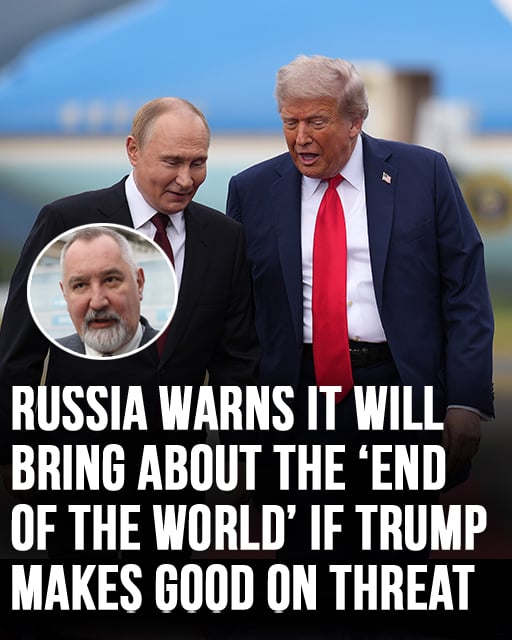
Meanwhile, Russia’s response has only amplified the danger. In Moscow’s corridors of power, hawkish figures have seized upon Trump’s Greenland gambit as proof of a broader plan: to turn the Arctic into a nuclear launchpad and missile shield, undermining the delicate strategic equilibrium that has kept nuclear war at bay since 1945. Russian media outlets echo the rhetoric, and hardline senators openly warn that this could be “the beginning of the end of the world” — language that may sound like bluster but, in the high-stakes world of nuclear deterrence, is understood as a signal rather than a threat.
Scholars of military history and arms control are watching in horror. They know that the greatest threats in nuclear standoffs rarely come from deliberate acts of aggression. Instead, the deadliest dangers arise from miscalculation, miscommunication, and the fog of crisis, especially when massive forces are arrayed in close proximity under heightened alert. In the Arctic night — where satellite coverage is limited, electronic signals can be spotty, and the environment itself is unforgiving — a single technical glitch, an ambiguous radar blip, or a poorly interpreted order could set in motion a chain reaction that no one can undo.
In an instant, a frozen island could become the flashpoint that breaks the fragile peace of the nuclear age — not through design, but through the terrifying unpredictability of crisis under pressure. And as leaders on all sides posture, parry, and prepare, ordinary citizens around the globe are left to wonder: how close is too close? And what price will the world pay for dreams of strategic dominance in the High North?