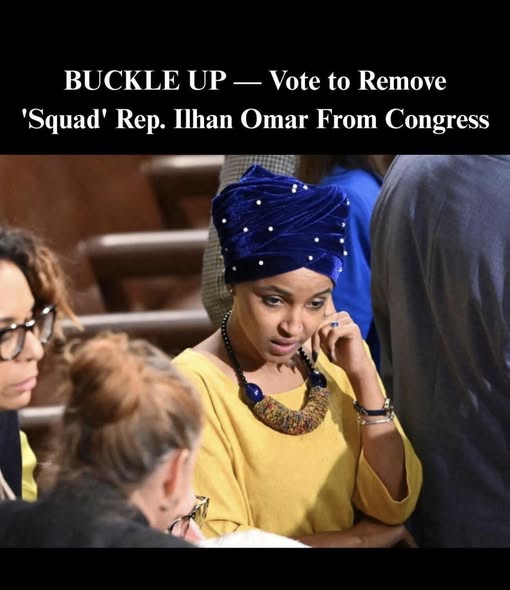
Rep. Randy Fine’s words landed like a political grenade, exploding across the airwaves and igniting a firestorm that could reshape national discourse. Speaking on live television, Fine didn’t merely criticize Rep. Ilhan Omar—he openly vowed to drive her out of the United States, a statement that instantly blurred the lines between political rhetoric and calls for extreme action. Behind his declaration looms a web of powerful figures and controversies: former President Donald Trump’s renewed attacks, a Department of Homeland Security review, and explosive fraud allegations emerging from Minnesota. In that collision of politics, law, and public outrage, careers, communities, and constitutional principles are now under siege in real time.
Fine’s call represents a stunning escalation in America’s ongoing battles over immigration, identity, and political power. No longer satisfied with merely censuring Omar or attempting to unseat her at the ballot box, he is openly pursuing what many would consider an extraordinary, unprecedented step: her removal from the country itself. To Fine, Omar embodies the very failures he perceives in U.S. immigration and welfare policy, a living symbol of systemic flaws he believes demand radical correction. By linking her directly to allegations of massive fraud in Minnesota, he paints her not simply as a political adversary, but as proof of a system gone awry—one he claims must be purged to restore order.
The stakes are heightened further by the involvement of Trump, who has repeatedly targeted Omar in speeches and social media posts, and by Tom Homan, the former acting director of Immigration and Customs Enforcement, who confirmed that DHS is actively reviewing her immigration history. These developments push the conflict far beyond partisan rhetoric, turning it into a real-world test of the limits of political power and legal authority.
Omar, a refugee-turned-Congresswoman, now finds herself at the center of a high-stakes drama that intertwines personal safety, constitutional rights, and political survival. The nation is watching: how far will a government go in pursuing what opponents frame as “justice”? How far will political rivals push back against threats that could redefine the boundaries of lawful dissent and free expression? And ultimately, can the line between political punishment and legal accountability still be clearly drawn—or has it already begun to blur?
As the story unfolds, the answers will reverberate across Washington and the country alike. Communities that once considered such debates theoretical are suddenly confronting them as urgent, real, and deeply personal. Careers hang in the balance, legal precedents teeter on the edge, and the very principles of democracy are being tested in the glare of national attention. In this escalating clash, every word, every tweet, and every legal maneuver carries consequences that may last far longer than anyone anticipated.