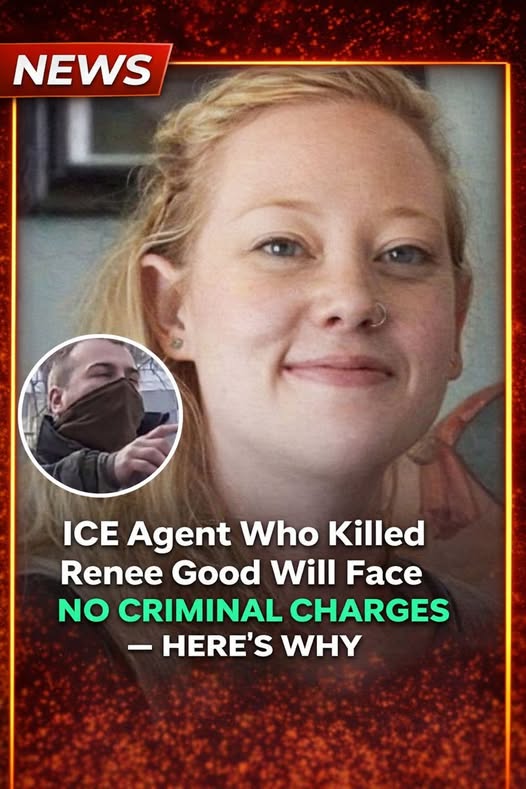
A woman is dead — shot and killed by a federal immigration agent — and the man who pulled the trigger walks away untouched. Her name was Renée Nicole Good, a 37-year-old mother, wife and artist, struck down in broad daylight in Minneapolis as tensions over federal enforcement boiled over into tragedy.
In the aftermath, families are shattered. The streets have filled with protest and grief. A nation more divided than ever struggles to reconcile what happened with what the law allows. And hovering over every debate, commentary and courtroom argument is one phrase that has become a rallying cry — “absolute immunity.”
How is it possible that someone can be killed in her own car — not accused of a violent felony, not convicted of any crime — and the agent responsible faces no criminal charges, no civil trial, no day in court? That question has consumed legal analysts, local leaders and national commentators alike.
At the heart of the answer lies a tangled web of federal legal protections and high prosecutorial standards that place extraordinary shields around law enforcement officers acting in the line of duty — especially federal ones. Under both federal law and the standards invoked in cases like this, an officer’s use of deadly force may be justified if a “reasonable officer” could have believed it necessary to prevent death or serious harm. Prosecutors aren’t merely required to show a mistake or poor judgment — they must prove that the officer acted with reckless disregard for human life or with malicious intent. That’s a threshold so high that in practice it is seldom met.
In Good’s case, federal authorities were quick to position the shooting as part of an enforcement operation and frame the agent’s actions as defensive, effectively invoking absolute immunity — a legal concept suggesting that, in many circumstances, federal officers cannot be prosecuted under state law for actions taken in their official capacity. Vice President *J.D. Vance publicly defended the ICE agent’s conduct, arguing that he is protected by this immunity — even as cameras and cellphone video offered conflicting views of the moments before Good was shot.
For many legal scholars and civil rights advocates, that notion of blanket immunity is misleading at best and dangerous at worst. Federal agents can be charged with crimes, including murder, if evidence shows their use of force was unjustified — but the path to such charges is narrow and often blocked by doctrines that prioritize officer protection.
The situation has been further complicated by political decisions inside the Justice Department. In the days following Good’s death, the department — under the current administration — declined to open a civil rights investigation, a move that was once almost automatic in controversial law-enforcement shootings. Instead, the FBI took over the investigation and limited Minnesota’s access to evidence, prompting criticism from state officials who say transparency and accountability are being compromised.
The fallout has been dramatic. Six federal prosecutors in Minnesota — including senior members of the U.S. Attorney’s office — resigned in protest over the handling of the case and the DOJ’s reluctance to pursue accountability. At the same time, Minnesota and Illinois have sued the federal government, challenging the aggressive deployment of ICE agents and arguing that their actions violate constitutional rights and state sovereignty.
For Good’s family, the legal protections that arguably shield the agent from prosecution offer no solace. They face the unbearable reality of loss without closure and a justice system that appears structured to protect government power even when a life is taken. Calls for reform have erupted nationwide as people wrestle with how the law is written, how it is interpreted, and whom it truly serves.
This isn’t merely a story about one tragic shooting — it is a prism through which we see deeper questions about power, accountability, and the limits of immunity in a democracy. It forces a reckoning with whether the rules that are meant to keep society safe instead place some lives beyond the reach of justice.