The smoke above the Vatican turned white on Thursday evening — a centuries-old signal that carries the weight of hope, history, and divine decision. The bells of St. Peter’s Basilica began to toll, echoing across Rome as crowds erupted into cheers and tears. From the heart of the Sistine Chapel, where the world’s Catholic cardinals had been locked in prayer and deliberation for two tense days, a new leader had been chosen.
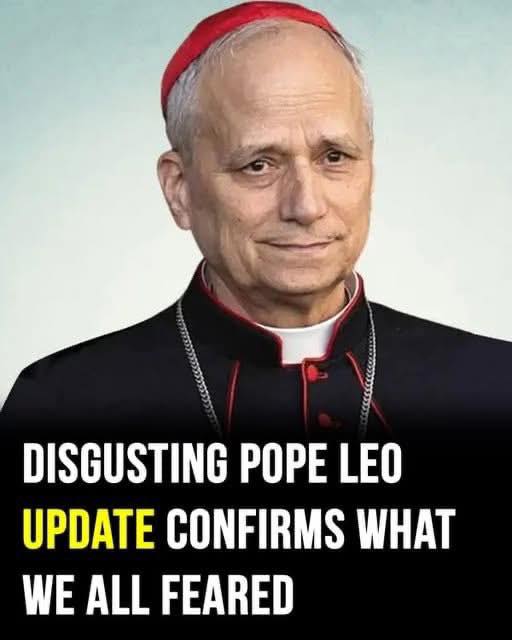
When Robert Francis Prevost, 69, stepped onto the balcony of St. Peter’s Basilica, the crowd surged forward, thousands of phones lighting up like candles in the dusk. A sea of flags — from Poland to the Philippines, from Brazil to Boston — waved beneath him. Moments later, the announcement came: “Habemus Papam — We have a Pope.”
He took the name Leo XIV, reviving a papal lineage not seen in over a century. The last Pope Leo reigned in the early 1900s, a period of seismic change for the Catholic Church. Now, once again, a man named Leo will guide the faithful through another era of uncertainty and division.
For many, Pope Leo XIV symbolizes both continuity and change. Born in Chicago, Robert Prevost spent much of his life working in Latin America, bridging cultures and languages in service to the Church. His election marks a rare moment in modern history — an American ascending to the papacy, representing a global church that has increasingly shifted its heart toward the southern hemisphere.
As his name was announced, pilgrims wept, embraced, and knelt in prayer. The Vatican’s ancient square glowed under the lights, the air thick with incense, emotion, and history. Choirs sang. Bells rang again. A new chapter had begun.
But while the faithful rejoiced, the reaction online was more divided. Within hours, social media platforms buzzed with celebration — and criticism. In the United States, MAGA-aligned commentators and far-right Catholic groups voiced disapproval, labeling Pope Leo XIV as “too progressive,” “too global,” and even questioning his legitimacy. Hashtags like #NotMyPope began trending among small but vocal corners of the internet.
Critics pointed to his record as a reformer and his close alignment with the late Pope Francis’s emphasis on inclusion, environmental stewardship, and compassion over confrontation. Supporters, however, saw that as precisely what the modern Church needed — a bridge-builder rather than a warrior.
Inside Vatican City, however, none of the noise reached the cobblestones. The newly anointed Pope appeared calm, his white robes glowing in the lamplight as he raised his hands to bless the crowd. His first words were simple, delivered in soft but firm Italian:
“Let us walk together — in faith, in mercy, and in hope.”
The crowd roared again, chants of “Viva il Papa!” rising into the Roman night.
Pope Leo XIV’s reign begins at a crossroads for the Catholic Church — one balancing faith with modernity, tradition with transformation. Whether hailed as a reformer or dismissed as a radical, his election has already stirred global attention and debate.
And so, under the watchful eyes of Michelangelo’s frescoes and the centuries of popes who came before him, Robert Francis Prevost — now Pope Leo XIV — takes his place in history.
The smoke has cleared, but the world now waits to see what kind of light this new Leo will bring.