.
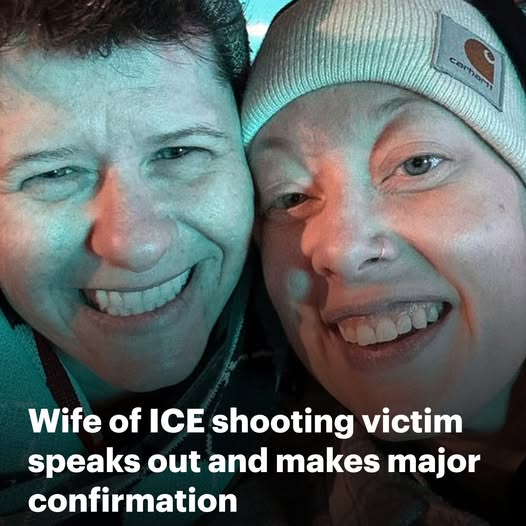
Renee Nicole Good’s name has become a rallying cry — and a wound — in Minneapolis. The 37-year-old mother, activist, and advocate for immigrant rights was shot and killed during a confrontation with Immigration and Customs Enforcement officers, in an incident that has set off a firestorm of anger, grief, and political division across the nation.
It began as an ordinary morning in a neighborhood already on edge. ICE officers were conducting enforcement activity when Renee and her wife, Rebecca Good, arrived to check on friends who had called, frightened by the sudden federal presence on their street. According to Rebecca, they came not as agitators, but as witnesses — determined to protect their community with cameras, not confrontation.
But within minutes, what began as tense words turned into tragedy.
Federal authorities claim that ICE agent Jonathan Ross opened fire after Renee allegedly refused repeated commands to exit her car and instead began to inch forward. Ross, they say, believed his life was in danger. Three shots rang out. Renee slumped over the wheel, bleeding as Rebecca screamed for help that never came fast enough.
The government quickly framed the shooting as self-defense, arguing that Renee had used her vehicle as a weapon. But that explanation unraveled when recently released video footage surfaced — showing a heated but nonviolent verbal exchange between the couple and federal agents moments before the shots were fired. There was shouting, yes, but no visible threat. Renee’s car did not appear to lurch forward; instead, it rolled slightly as she reached for something inside.
The footage ignited a firestorm online. Protesters filled the streets of Minneapolis, holding candles and homemade signs that read “Whistles, not weapons.” Civil-rights groups demanded accountability, calling the government’s version of events “a familiar script — one that always seems to justify lethal force.”
Local leaders, including Minneapolis Mayor Jacob Frey, have publicly condemned the federal narrative. “Self-defense? Garbage,” Frey said at a press conference, his voice tight with frustration. “Anyone who’s seen that footage knows what they’re looking at. This was not a threat. This was a woman trying to de-escalate with words — and dying for it.”
Renee’s wife, Rebecca, has since spoken through tears to Minnesota Public Radio, painting a picture of a woman whose courage came from compassion, not confrontation. “Renee believed in responding to injustice with care, not fear,” she said. “We had whistles. They had guns. And that’s the imbalance we live with every day.”
Friends describe Renee as faith-driven and fiercely kind — the kind of person who would pause to comfort strangers, who believed activism was an act of love, not war. She leaves behind three children, including a six-year-old boy who has now lost both parents. “She wanted her son to grow up believing that gentleness is not weakness,” Rebecca said softly. “That’s how I’ll honor her — by teaching him compassion, resilience, and humanity, even in the face of loss.”
The Justice Department, the Minneapolis Police Department, and an independent civilian oversight board have all launched investigations into the shooting. But for many, the outcome may never restore trust. The city that once became a symbol of reform after George Floyd’s death now faces another painful reckoning — this time with federal power itself.
Outside the church where mourners gathered this week, candles flickered in the cold wind. Some carried signs demanding justice; others simply whispered Renee’s name. The crowd was silent for a long time before someone began to sing softly — the same hymn, witnesses say, that Renee had loved to hum to her son at bedtime.
And for a moment, Minneapolis stopped shouting. It simply listened.