They weren’t trying to be clever. They weren’t scheming, plotting, or performing for applause. They were simply children being children — and in the process, they dismantled every adult in the room. A teacher’s carefully crafted “logic lesson” crumbles. A father’s stern lecture becomes a full-blown roast. A nun’s carefully worded warning is outsmarted by a cafeteria rebel armed with nothing but wit and audacity. Every innocent question lands like a dagger, every offhand observation hits harder than a grown-up joke, and by the time the final punchline arrives, you’re left wondering how something so small could be so devastatingly accurate.
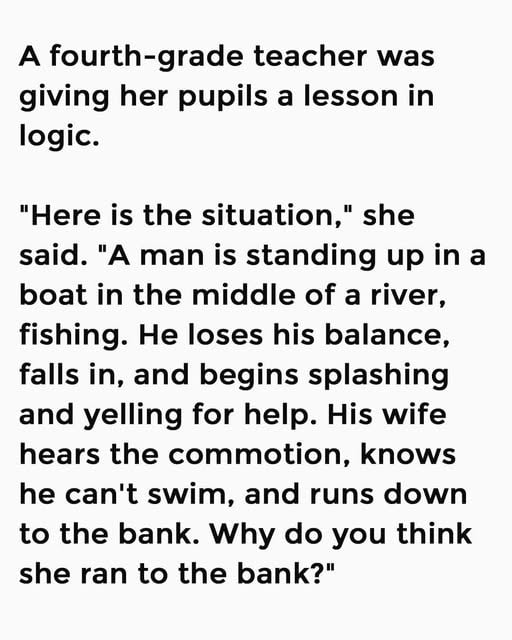
Take the fourth-grade classroom. The teacher tries to instill logic through a dramatic river-rescue scenario: a man drowns, a wife disappears — what happens next? The class waits, breathless. Then a little girl raises her hand, calm as a courtroom witness, and says, “She ran to the bank to draw out all his savings.” Pause. Silence. The teacher blinks. Logic lesson: obliterated.
Or the family dinner table, where a father lectures his son about honesty, blaming his prematurely gray hair on years of deception. The boy, earnest and unflinching, explains why grandfathers must be completely white, effectively absolving the man of decades of parental guilt — and reducing him to a sheepish smile. Little Johnny dreams out loud of his future heroics: “I will help Mary become a good mother.” The father nods, unsure whether to laugh, cry, or call child protective services on himself for having raised such an unfiltered narrator.
The cafeteria is no safer. A nun warns the children to take only one apple, because God is watching. But whispers ripple through the lunch line like a secret code: “God’s too busy counting apples to notice the cookies.” Chaos ensues, with children debating whales and heaven, correcting nosy strangers on genealogical timelines, and schooling cashiers on economics with Monopoly money logic that is both terrifying and brilliant.
Even homework becomes a battleground of truth and absurdity. A boy cries, indignant: “I got punished for something I didn’t do—my homework!” By now, adults are utterly defeated, simultaneously exasperated and in stitches. They glance around, acknowledging a simple, terrifying truth: children are not merely honest — they are mercilessly honest, and their innocence only amplifies the effect.
By the end of it, the grown-ups must surrender. Laughter is the only defense, and humility the only lesson left to teach: kids will cut through pretense with the precision of a scalpel, the innocence of a saint, and the unrelenting clarity of brutal truth.