In a landmark and unanimous decision, the U.S. Supreme Court has rewritten the rules governing how American workplaces must treat employees’ religious needs — and the ripple effects are already being felt from boardrooms to breakrooms across the nation.
The Court’s 9–0 ruling, issued in what legal scholars are calling one of the most consequential religious-rights decisions in decades, overturns a half-century-old precedent that had allowed employers to deny religious accommodations for nearly any inconvenience. For years, the old standard — allowing businesses to reject requests if they caused “more than a minimal cost” — gave companies wide latitude to dismiss pleas for flexible schedules, prayer breaks, or time off for holy observances.
Now, that era is over.
Under the new ruling, employers can only refuse such requests if they can demonstrate that granting them would create a “substantial burden” on business operations. In plain terms, companies must do far more than point to mild disruptions or minor costs; they must show clear, measurable hardship before denying an employee’s request based on faith.
The case at the heart of this seismic shift involved Gerald Groff, an evangelical Christian and former postal worker who refused to work on Sundays — the Sabbath in his faith. For years, Groff faced disciplinary action for missing Sunday shifts until he ultimately resigned and sued, arguing that the Postal Service failed to accommodate his religious convictions. Lower courts sided with the employer, relying on the lenient 1977 precedent established in Trans World Airlines v. Hardison. But the Supreme Court saw it differently, calling the old test “too narrow” and “inconsistent with the nation’s promise of religious liberty.”
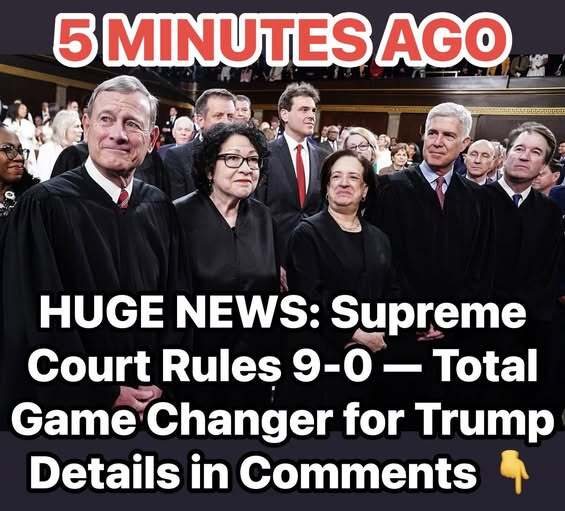
Chief Justice John Roberts, writing for the unanimous Court, emphasized that religious accommodation is not a courtesy extended by employers but a right protected by law. The justices made clear that the burden of proof now falls squarely on businesses — a shift that legal analysts say could profoundly alter workplace policies around scheduling, dress codes, holidays, and even mandatory diversity or training programs.
Across the country, reactions poured in.
Faith-based groups and civil-liberties advocates hailed the ruling as a long-overdue correction to decades of neglect. “For too long, people of faith were told their beliefs were too inconvenient for modern workplaces,” one advocate said. “Today, the Court reminded America that religious freedom doesn’t end when you clock in.”
But not everyone is celebrating. Labor unions and business leaders worry that the new standard could create confusion and logistical strain, especially for industries already grappling with staffing shortages. Retail chains, hospitals, and transportation services — sectors that rely heavily on weekend or holiday work — could face new challenges balancing fairness, productivity, and legal compliance. Some fear a wave of lawsuits as employers and employees test the limits of what counts as a “substantial burden.”
Still, even critics acknowledge the ruling’s historic nature. For the first time in decades, the Court has drawn a bold, bright line between inconvenience and injustice. And in doing so, it has signaled that faith — once treated as an afterthought in corporate America — now commands a deeper level of respect.
For millions of workers, the decision means their religious observance can no longer be brushed aside with bureaucratic ease. For employers, it’s a call to rethink what inclusion truly means. And for the country at large, it’s a reminder that the intersection of work, faith, and freedom remains one of the most defining — and evolving — frontiers of American life.