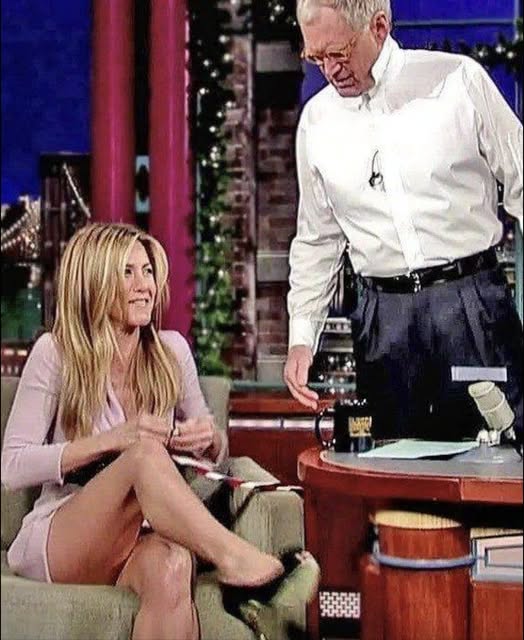
The crowd roared. She didn’t.
Under the blistering heat of studio lights, laughter once echoed like a national anthem — familiar, rhythmic, and unquestioned. What millions consumed as harmless late-night fun now replays like a warning we all chose to ignore. His hand on her shoulder, the teasing disguised as affection, the camera lingering a beat too long — these weren’t just gestures. They were signals. The performance we mistook for chemistry was, in hindsight, choreography — power disguised as play.
In the glow of a bygone era, it looked effortless: America’s favorite host, America’s sweetheart, and a crowd that couldn’t get enough. But freeze the frame, mute the laughter, and the illusion cracks. You see her flinch ever so slightly, the smile that doesn’t reach her eyes, the practiced composure that comes only from knowing the world is watching and waiting for you to make it easy for them to keep laughing.
Now those clips — viral again, dissected in high definition — tell a story far heavier than the jokes that once carried them. It’s not just about one man, or one talk show, or even one woman forced to play along. It’s about the culture that made it possible — a machinery of entertainment that taught women to be good sports about their own discomfort and trained audiences to reward their silence.
Jennifer Aniston’s grace, once read as cool detachment, feels different now. It’s armor — polished, necessary, and heartbreakingly visible in hindsight. Every tilt of her head, every deflection with a smile, was a tiny act of survival performed in plain sight.
Rewatching these moments is like opening an old diary written in a language we’ve only now learned to understand. What we once called “banter” was often boundary-testing. What we called “chemistry” was compliance under pressure. The easy laughter of the audience becomes a haunting soundtrack to something far more complicated — a public lesson in how charm can smother agency.
And so, as we sit with the unease that rises in our stomachs today, it’s not just guilt. It’s recognition. A reckoning. The realization that our laughter once bought silence, that applause once drowned out discomfort.
We can’t rewrite those nights under the studio lights. But we can learn to see differently. To listen differently. And maybe next time — when the crowd roars and one face in the room doesn’t — we’ll finally know which sound matters most.