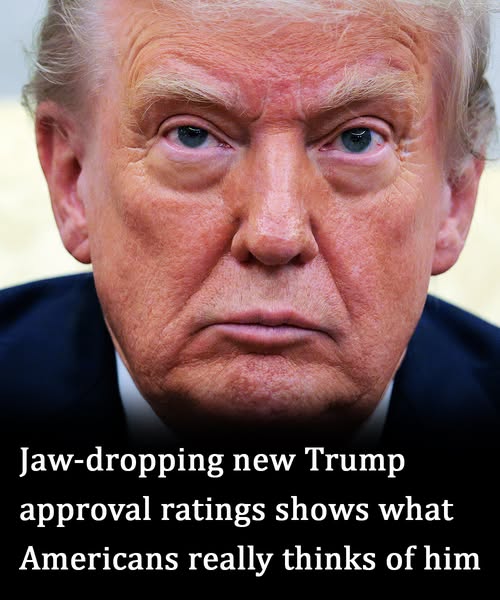
After years of tariffs, diplomatic flare-ups, and a barrage of executive orders, even some of Donald Trump’s allies expected his second term to open with a political freefall. Economists warned of global blowback, foreign partners signaled fatigue, and Washington insiders whispered that the chaos would finally catch up with him. Instead, something stranger happened: the collapse never came. His approval ratings, far from crumbling, have hardened into something almost immovable.
Every confrontation — every trade war, immigration crackdown, and institutional clash — was expected to erode his base. Yet, each one has done the opposite, testing the outer edges of American tolerance and finding, again and again, that the floor beneath Trump’s support is made of reinforced concrete.
His second term has unfolded less like a fresh start and more like a sustained collision course — with Washington, with global markets, with convention itself. Tariffs are straining global supply chains, inflation anxieties persist, and allies from Europe to Asia are bristling at the new American posture. Still, nearly half the country says the same thing: stay the course.
To his supporters, the chaos is not disorder — it’s proof of delivery. They see a president unafraid to fight entrenched systems, to challenge multinational interests, to close borders, to reassert national strength. The turbulence is interpreted as motion — and motion, in their eyes, means progress. “He said he’d shake things up,” one voter recently told a reporter. “He’s doing exactly that.”
To his critics, the same picture looks catastrophic. They see reckless brinkmanship masquerading as boldness, a governing style that mortgages long-term stability for short-term applause. Economists warn that the real costs — in trade, diplomacy, and institutional credibility — have yet to fully arrive. What looks like resilience today, they argue, could harden into fragility tomorrow.
And yet, beneath the daily noise of headlines and hashtags, the country remains suspended in a strange equilibrium. Trump governs through confrontation; America responds with division — but not retreat. It’s as if the nation has settled into its polarization, locked in a feedback loop where outrage and loyalty feed off each other in equal measure.
For pollsters, it’s a paradox. For historians, it’s a case study in political endurance. Approval numbers that should fluctuate instead hover within a narrow, stubborn band — impervious to scandal, criticism, or even fatigue. Each controversy that once would have been fatal now seems to fortify the narrative: that Trump is still the outsider taking on a system that refuses to yield.
But beneath that surface calm lies a question with sharp edges. Can this durability last once the consequences of policy — the tariffs, the debt, the diplomatic ruptures — begin to touch everyday life more directly? When the abstract becomes personal, when the headlines reach the dinner table and the grocery store, will the numbers still hold?
That is the test awaiting Trump’s America: whether this hardened approval is true entrenchment — or the calm before an unforgiving turn.