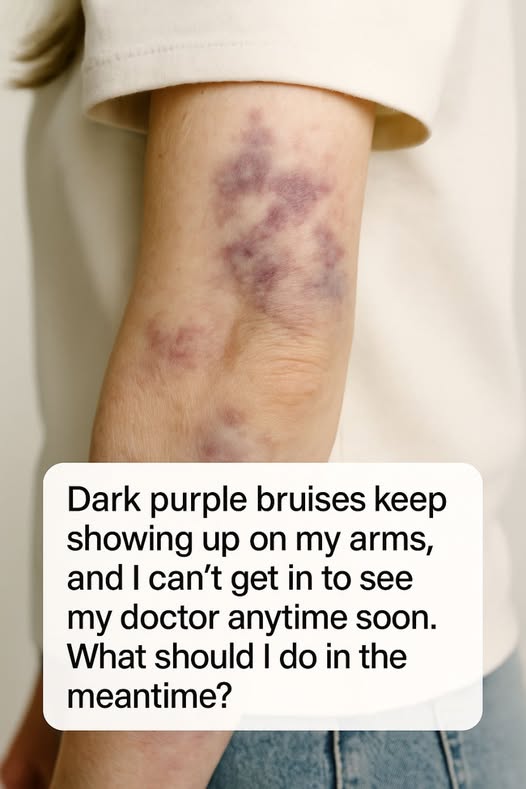
They appear without warning.
A soft ache. A brush of purple blooming beneath your skin like ink in water. You don’t remember bumping into anything — no fall, no knock, no careless edge of furniture. And yet there it is, unmistakable and unsettling: a dark, spreading bruise that seems to have appeared out of nowhere.
It catches your attention in the mirror, or maybe while reaching for a sleeve. You pause, you wonder, and then you worry. Where did this come from? What does it mean? You replay your days — a grocery trip, a walk in the park, a moment of lifting something heavier than usual — but the answer never quite surfaces. The bruise feels like a secret your body knows but hasn’t told you yet.
For many people, especially as the years gather, these quiet bruises are not messages of danger but whispers of time. The skin, once resilient, becomes thinner and more delicate. The small blood vessels that run just beneath it — those fine networks that once flexed and healed invisibly — now rupture more easily. A light bump that wouldn’t have left a mark decades ago can now paint a deep purple stain that lingers for days.
Doctors have a name for this: senile purpura — though the term itself sounds far harsher than the reality. It’s a common condition, especially on sun-exposed areas like the forearms and the backs of the hands. The cause isn’t mysterious: years of sunlight, simple aging, and sometimes medications such as blood thinners, corticosteroids, or even supplements that affect clotting. The result? Skin that bruises easily, visibly, but harmlessly.
Still, the unease is real. Seeing new marks appear without a clear reason naturally sparks anxiety. And that concern, that vigilance, is not overreaction — it’s awareness. It’s the quiet intelligence of someone who pays attention to their body.
If you’re waiting to see your doctor, you don’t need to do much in the meantime. Observe gently. Take photos of the bruises to note their shape and color over time. Write down when they appear, how quickly they fade, and whether you notice any patterns. Keep a list of medications and supplements — even vitamins and herbal products — since some can make bruising more likely.
There are a few times when you should reach out sooner rather than later. If bruising is rapidly spreading, painful, or accompanied by other warning signs — frequent nosebleeds, gum bleeding, unexplained fatigue, fever, or tiny red spots on the skin — it’s best to be evaluated promptly. These could suggest issues with blood counts, platelets, or other underlying conditions that deserve attention.
For most, though, gentle care is enough. Protect your skin from bumps by wearing light sleeves or soft fabrics. Apply a cold compress if the area feels tender. Avoid harsh “home remedies” that promise quick fixes — bruises fade best with time and rest. And most importantly, resist the instinct to panic.
A bruise can be many things: a trace of age, a sign of fragility, or simply the mark of a body doing what it’s always done — healing. What it doesn’t have to be is a cause for shame or fear. The act of noticing is powerful; it’s the first step toward understanding.
So when those dark purple marks appear again, take a breath. Let them remind you not only of what the body endures, but of what it reveals. Listening closely to yourself — with calm, patient curiosity — is not a symptom of worry. It’s a form of care, and perhaps the purest expression of self-respect there is.