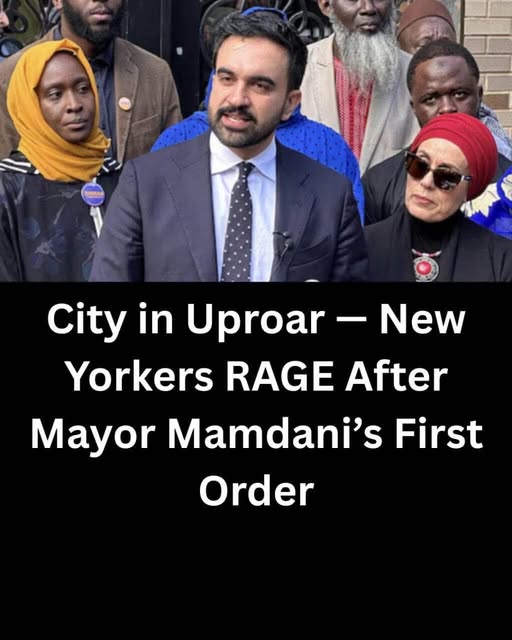
The city didn’t see this coming.
No headline warned it. No poll predicted it. Just a little-known assemblymember from Queens stepping into a crumbling Brooklyn walk-up — the kind of place where the walls remember every winter leak and the air smells faintly of paint, dust, and endurance — and walking out with a plan to upend the city’s oldest power balance.
It started small, almost invisibly: a few desks, a handful of organizers, and an idea that looked naïve to the landlords who had long written the rules. The space itself was modest, but the vision was not. Where others saw another forgotten office, Zohran Mamdani saw a weapon — a chance to prove that power could be rebuilt not from a podium or a boardroom, but from the bottom stairwell up.
Landlords laughed. Bureaucrats shrugged. Even some allies rolled their eyes. But then the letters started arriving.
Stamped with the city’s seal and signed by inspectors, these weren’t campaign flyers or empty threats — they were orders, the kind that froze rent hikes, reopened neglected repairs, and forced long-silent agencies to listen. And one by one, the quiet machinery that had kept tenants afraid — the eviction notices, the ignored complaints, the whispered warnings about “not making trouble” — began to jam.
Every envelope was a small revolution. Every case number a defiance of the idea that tenants were meant to endure rather than demand.
Mamdani’s revival of the Mayor’s Office to Protect Tenants, now led by housing organizer Cea Weaver, wasn’t just administrative reshuffling — it was a redrawing of the battlefield. The office had once been little more than a pamphlet-printing afterthought; now it’s a nerve center. Tenants who used to collect flyers now collect data — dates, photos, inspector IDs, court filings — the kind of evidence that can turn despair into action.
And with that, the city’s balance of fear began to tilt.
Around that enforcement core, new experiments have started to take shape: LIFT and SPEED, two task forces designed to do what New York’s housing system has long refused to — move fast, build smart, and make homes out of public land without erasing the communities that live beside them. It’s a narrow path, one that runs between the cliffs of displacement and decay, and Mamdani walks it without a safety net.
His wager is simple, but staggering in scale: that a city drowning in rent and cynicism can still be rebuilt from the ground up — not by billionaires, not by developers, but by the same people who hold the subway poles, sweep the hallways, and pay rent every month just to stay in place.
This is not a movement of slogans; it’s one of spreadsheets, subpoenas, and steady pressure. It lives in the low light of tenant meetings and the hum of photocopiers. And yet, beneath the bureaucratic grind, something radical is taking root — a belief that tenants are not the city’s burden, but its backbone.
Whether it lasts is another question entirely. The forces arrayed against it — money, inertia, fatigue — are enormous. But for now, in these overworked offices and overcrowded hallways, something rare is happening: government is remembering who it’s supposed to protect.
If Mamdani succeeds, the city’s packed subway cars will still be filled with workers who can afford to live where they labor. If he fails, this moment — this fragile, furious experiment — will harden into legend: a brief, bright revolt swallowed by the very city it tried to save.