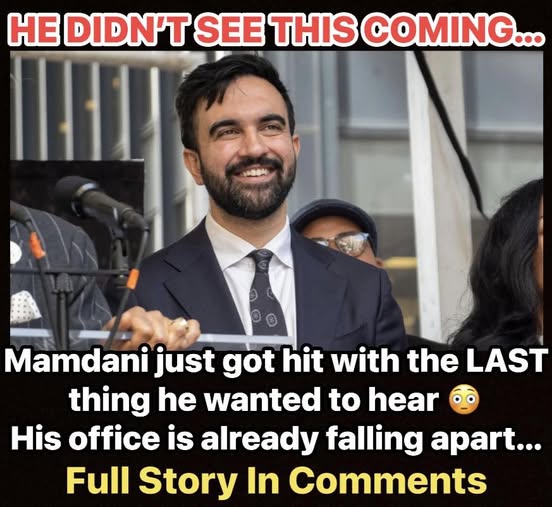
He didn’t just take office. He detonated a debate.
Within hours of stepping into City Hall, New York’s new mayor, Zohran Mamdani, turned what was meant to be a ceremonial first day into a political firestorm stretching from Manhattan to Jerusalem. His decision to rescind a series of executive orders signed by his embattled predecessor, Eric Adams, didn’t just reset city policy — it touched one of the most volatile nerves in global politics.
By revoking Adams’ post-indictment directives, Mamdani also erased New York City’s official endorsement of the IHRA definition of antisemitism — a framework widely adopted by Western governments but increasingly criticized for blurring the line between genuine antisemitism and political opposition to Israel. In the same stroke, he ended the city’s quiet boycott of the Boycott, Divestment, and Sanctions (BDS) movement — a gesture that Israel’s government and major Jewish organizations interpreted as a dangerous invitation to extremists.
The reaction was instant and ferocious.
Israel’s Foreign Ministry accused Mamdani of “legitimizing hatred.” Prominent Jewish leaders in the U.S. warned that his actions would embolden antisemites. Republican lawmakers declared it proof that progressive politics had “turned its back on the Jewish people.”
And all the while, Mamdani stood firm, insisting his move had nothing to do with foreign allegiances and everything to do with clean government, free expression, and constitutional integrity.
“New York cannot fight hate by policing opinion,” Mamdani said at his first press conference. “We defend Jewish New Yorkers not by silencing debate, but by protecting every community from harm.”
His argument rests on a controversial premise: that true safety for Jews — and all minorities — depends not on symbolic pledges but on substantive protections, such as fully funded hate-crime prevention programs, stronger anti-discrimination enforcement, and an end to what he calls “political litmus tests masquerading as ethics.”
To his critics, it’s a reckless gamble. To his supporters, it’s a long-overdue correction — a chance to prove that fighting antisemitism doesn’t require suppressing dissent about Israel’s government.
But few doubt the scale of his challenge. In the most scrutinized city in the world, Mamdani must now convince millions that rejecting the consensus definition of antisemitism does not mean rejecting the fight against antisemitism itself. Every press conference, every police report, every protest that unfolds under his watch will test that claim.
What began as a routine bureaucratic reversal has become something far larger:
a global argument over where the line between hate and criticism truly lies, and whether a city defined by diversity can also redefine what solidarity means.
Mamdani has promised a “New York model” — one grounded not in fear or faction, but in universal rights. The coming months will determine whether that vision holds… or whether the city he leads becomes the next battlefield in a fight that spans continents.