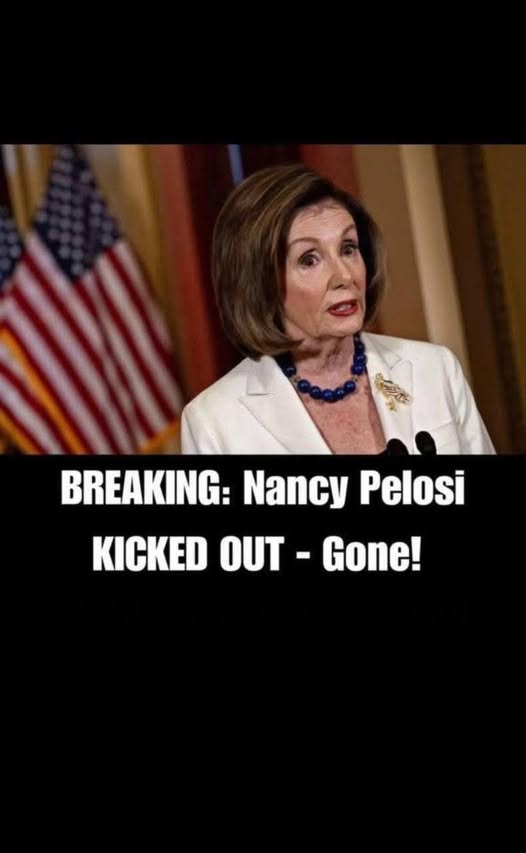
What was meant to be a calm and intellectual evening at the City University of New York’s Graduate Center quickly turned into a political spectacle on Monday night. Rep. Nancy Pelosi, seated beside Nobel Prize–winning economist Paul Krugman, was mid-conversation when a series of furious hecklers shattered the calm with explosive accusations that echoed through the auditorium.
It wasn’t just one outburst—it was four separate interruptions, each more biting than the last. The audience, a mix of students, academics, and political enthusiasts, found themselves caught between discomfort and disbelief as voices from the crowd hurled personal and political attacks at the former House Speaker.
Pelosi, a veteran of political storms, remained composed, though the tension in the room was palpable. One heckler stood up and unleashed a tirade that stopped the discussion cold:
“You know, Pelosi, that’s a very good place for you—in the depths of hell,” the man shouted. “For some reason, you have a very bad obsession with getting us into war! Why didn’t you admit there were no WMDs in Iraq?”
Gasps rippled across the audience. Security began to move in, but the heckler continued, raising his voice above the commotion.
“You lied us into a war in Iraq! You got us to invade Afghanistan! Now over 90 percent of those people are impoverished and dying! Why don’t you tell the truth about Nord Stream? Why did we destroy it? You’re leaving millions of Germans without energy!”
Each accusation landed like a punch, mixing old grievances with modern geopolitical tensions. The interruptions came in waves, each from a different critic—some condemning her foreign policy record, others mocking her as a “sad old drunk” or “corrupt insider.”
While Krugman tried to steer the discussion back toward economics and governance, the audience’s attention was riveted to the chaos unfolding before them. The once-scholarly setting began to feel more like a public tribunal, with Pelosi as the accused.
Despite the jeers, Pelosi maintained her composure—offering brief smiles, tight-lipped pauses, and the occasional sharp retort before returning to the discussion. Her calm under fire contrasted sharply with the fury in the room, underscoring the decades of political resilience that have defined her career.
By the time order was restored, the atmosphere had shifted. The hecklers had left their mark—transforming what was meant to be an academic exchange into a vivid reminder of how polarized and emotionally charged American politics has become.